

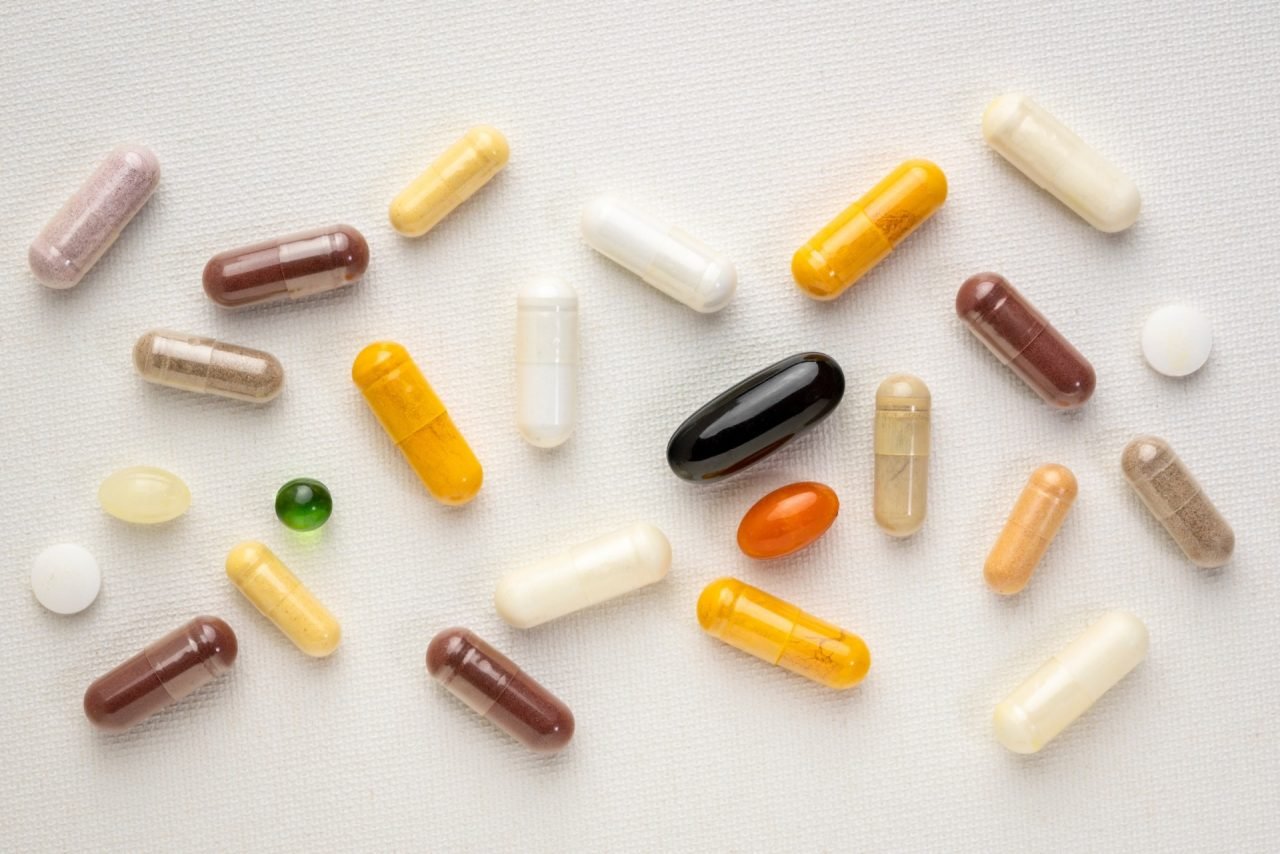
A growing share of Americans are turning to dietary supplements to treat ailments and boost their health. Nearly three in five adults, and more than a third of children and teens, now take at least one supplement, fueling a $60-billion-a-year market of products that aren’t regulated like drugs.
Some supplements — which include vitamins, minerals, herbs, probiotics and more — can help fill nutritional gaps. But most offer no scientifically proven benefit, and some can be harmful. With social media influencers promoting untested cure-alls and artificial intelligence chatbots dispensing questionable medical advice, it’s increasingly hard to separate fact from hype.
To cut through all the supplement noise, we spoke with Marily Oppezzo, PhD, instructor of medicine at the Stanford Prevention Research Center and head of nutrition at Stanford Lifestyle Medicine, and Catherine Hu, a clinical dietitian in endocrinology.
Both Stanford Medicine experts cautioned against subscribing to five common misconceptions about supplements.

Marily Oppezzo and Catherine Hu
Myth #1: Everyone should take them
Supplements typically make sense only for those with a proven deficiency, restricted diet or specific condition known to benefit from them, the experts say.
Getting blood tests through a medical provider can show whether someone is clinically deficient in certain vitamins or minerals. Symptoms like fatigue, skin changes and brittle nails can be a sign to get checked out. Blood labs don’t provide a full view of nutrition, however, as we don’t store most nutrients in the serum. Meeting with a dietitian can help with personalized recommendations.

Making sense of the sugar-cancer connection
- Addiction
People with highly limited diets could also benefit from supplements, Hu said. For example, she recommends vegans take vitamin B12, typically found in animal products, and consider calcium, zinc, iron and vitamin D. Those who have undergone bariatric surgery or are taking GLP-1 agonists, such as Ozempic, likely need additional nutrients because they are eating less, Oppezzo said.
Patients who are pregnant should take prenatal vitamins containing folic acid and omega-3 fatty acids, Hu said, and people over age 50 may need extra nutrients like calcium, vitamin D and vitamin B12 to promote bone and nerve health. Supplements have also been proven to help health conditions such as osteoporosis, high triglycerides and age-related macular degeneration, Hu said. Athletes and those going through perimenopause may also need extra iron, Oppezzo added.
For others, taking a good-quality multivitamin isn’t usually harmful, but it may not be necessary. “A lot of people take multivitamins to cover all their bases, and there’s nothing wrong with that,” Hu said. “But if someone is eating a varied-enough diet, they should be getting all their nutrition through that.”
Myth #2: They’re safe because they’re natural
The Food and Drug Administration regulates supplements as food, not drugs, so it doesn’t verify their safety, effectiveness or contents before they’re sold. As a result, the purity and dosage of products can vary widely. For example, some turmeric pills have been found to contain high doses of heavy metals, and spirulina and chlorella tablets can include mycotoxins, Oppezzo noted. The experts recommend sticking to supplements whose quality is verified by independent groups, such as US Pharmacopeia, NSF or Consumer Lab.
Supplements can also interact with medications. For example, vitamin K can make blood thinners less effective, and combining St. John’s wort with antidepressants can be dangerous. “I would always recommend speaking with your medical provider and letting them know what supplements you’re taking,” Hu said. “They can confirm based on your medications, and the disease or chronic condition you have, whether it’s safe.”
I would always recommend speaking with your medical provider and letting them know what supplements you’re taking. They can confirm based on your medications, and the disease or chronic condition you have, whether it’s safe.”
— Catherine Hu
Myth #3: You can take them and not worry about your diet
Evidence suggests that many nutrients are better absorbed through from foods than from supplements, and heat processing to make supplements shelf-stable can make them less potent. “If you take a special compound out of broccoli and put it in a powder, it’s not going to have the same effect as the whole plant did,” Oppezzo said. She notes that there is stronger evidence that fermented food such as yogurt, kefir and kimchi improve gut health than there is for probiotics.
Even people who take supplements should eat a balanced diet, Hu said. “Focus on eating whole foods and a variety of foods,” she said.
Supplements also can’t replace movement and other elements of a healthy lifestyle, Oppezzo said. “People think it’s easier to take a pill than to go exercise. True, but it doesn’t make it better.”

Increasing awareness of high blood pressure risk
- Addiction
Myth #4: More is better
Higher doses of nutrients don’t necessarily lead to better results and can sometimes backfire, the experts warned. “A lot of times, companies put in a very large quantity of the supplement that might be more than most people need,” Hu said. That’s not an issue when the body excretes what it can’t absorb, as with vitamin B complex.
But other compounds can build up and pose health risks. For example, too much vitamin B6 can damage nerves, high doses of omega-3s can trigger irregular heartbeat in some people, excess vitamin A in retinoid form can harm the liver, and excessive vitamin D may increase the risk of fractures.
To avoid overdoing it, Hu suggests sticking to recommended dietary allowances set by the National Academies of Sciences, Engineering and Medicine, which vary based on age, sex and other factors.
Supplements containing multiple minerals, or high doses of a mineral, may not be fully absorbed. “Multivitamins have all these minerals, like iron and calcium, that compete for absorption,” Oppezzo said. “Also, you can’t take 1,000 milligrams of calcium and absorb it all at once- I think only about 500 mg get into your body.” She recommends if you’re going with a multi, choosing multivitamins without minerals, splitting up larger doses of minerals throughout the day and taking multivitamins every other day if they greatly exceed recommended values.

Alcohol consumption and your health
- Alcohol
Myth #5: They can fix everything
In some cases, claims of supplement efficacy are backed by solid research. For example, magnesium is a proven stool softener, and creatine has been shown to help contribute to muscles energy supply, Oppezzo said. (Oppezzo takes omega-3 pills, which promote heart health among other benefits, to complement what she gets from food.)
But for many popular supplements, the proof is lacking. Studies have found that melatonin, for one, shortens the time it takes to fall asleep by an average of only four minutes, Oppezzo notes. “The effect size is so small, why don’t you spend your time and money on something else?” she asked.
Even when taking unnecessary supplements isn’t harmful, it can be costly. “Some people refer to it as having very expensive urine,” Hu said.
Oppezzo warns against turning to supplements as a substitute for proper diagnosis or evidence-based treatments. “Sometimes it displaces seeking out normal care,” she said. “In the worst cases, people are taking supplements for perimenopause or cancer, when we have really effective, FDA-approved ways to handle those conditions.”
If you’re feeling fatigued or having other symptoms while otherwise healthy, Oppezzo suggests looking at major pillars of well-being before turning to micronutrients. “Are you getting enough calories, carbs, fats, proteins? Are you getting enough sleep?” she said. “These are the big drivers. Most people are pretty good at getting enough micronutrients unless they’re on a really restricted diet.”

INSIGHTS: Going beyond the headlines
Sharing the informed perspectives of those leading medical research, patient care and education at Stanford Medicine

Alcohol consumption and your health: What the science says

Sleep and mental health: What the science says

Young people and nicotine: 5 things to know
Ultraprocessed food: 5 things to know

Kids, teens and antidepressants

The science behind sunscreen

Understanding the gut-brain connection
- Insights
- 8
- 9
- 6
- 2
- 3
- 4
- 5
