

Autumn celebrations are often designated as times to “reap what you sow” and for many Pagans, Heathens, and Witches that means harvest time for plants with both magical and medicinal purposes
The Wild Hunt spoke with both amateur and professional herbalists to see what’s their favorite plant to grow and what’s an easy, beneficial plant for a beginner to grow.
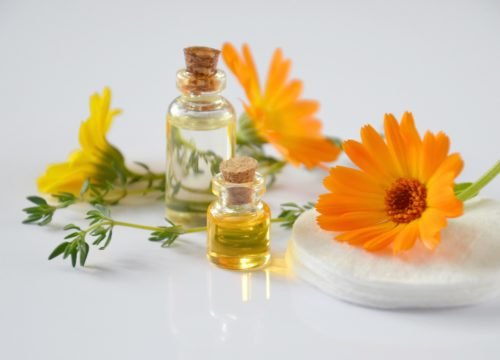
Calendula [Pixabay].
Medicinal Herbs
Musician Bonnie Hanna-Powers says she grows calendula in her garden. She says it’s easy to grow but does prefer good soil.
“This year I grew my plants from transplants, in one garden, and from direct sowing the seeds in another,” says Ms. Hanna-Powers. She says that she had better luck with transplants than the seeds.
After harvesting the flowers, she dries them on a screen in a well ventilated room. Then incorporates them into topical skin preparations. “It’s a good all around skin herb because of it anti-bacterial and wound healing properties,” says Hanna-Powers.
She also enjoys the smell. “It gives any preparation a pleasant, homey scent. It also makes a beautiful flower for the cutting garden.”
“I grow henbane for use as an entheogen, sometimes mixed with cannabis,” says Mr. Clifton.
He notes that author Dennis McKenna wrote in his memoir The Brotherhood of the Screaming Abyss that datura is a hallucinogen, but not a psychedelic. “I am still trying to decide if he is right or not, but cautiously,” says Clifton.
However, Clifton says that he is increasingly turning toward native, tougher plants like nettles. He cooks with them and also uses the roots to make a tonic that he says is good for male urinary systems.
Philadelphia Witch Karen Bruhin says she doesn’t have the gardening space that rural and suburban Witches enjoy. Her go to plants are horehound and chamomile.
She says both plants are easy to grow, with the chamomile reseeding itself and the horehound spreading like a mint plant.
“For the horehound I simply wash it and use it in a homemade simple syrup for cough medicine,” says Ms. Bruhin. The chamomile, on the other hand, is washed, dried in an oven, and stored in airtight containers to make soothing tisanes.
Heathen Chuck Hudson forages, rather than grows, his herbs in New Mexico. He looks for Yerba Mansa and Osha root.
He says Yerba Mansa is a very old native medicinal herb, but it is becoming popular and harder to find. He dries the roots and leaves and stores them is a cool, dry place.
Mr. Hudson says that Yerba Mansa works as a mild anti-inflammatory agent and has astringent, diuretic, and anti-fungal properties. However, he also cautions that it should not be used internally by pregnant or nursing women. “Externally it’s a wonderful wash for insect bites poison ivy blister. The fresh leaves made into a poultice is great for sore muscles.”
Hudson adds that, when he harvests a plant, he leaves an offering for the Land Spirits and builds a little stone house for any spirits to live in in case her disturbed them by harvesting the plant.
“I along with some close friends are trying to revive the faith/health healing part of the Heathen faith,” says Hudson.
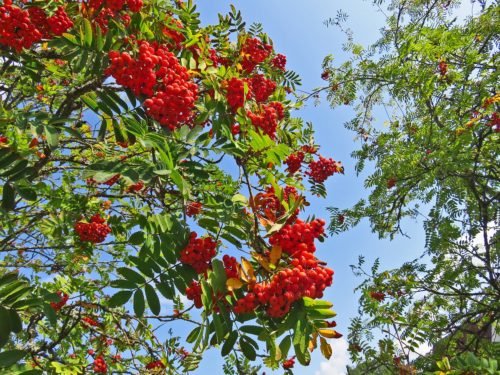
Rowan [Pixabay].
Magical Herbs
Minneapolis Witch Tasha Rose grows the plant that is her namesake. “I have, for my entire life, had wild roses everywhere I have ever lived. They follow me around. Roses are by far my favorite magical and medicinal plant.”
She says that wild roses are very easy to grow and will take over a place if you’re not careful to cut them back. Ms. Rose says that she uses every part of the plant. In spring she harvests the petals to make rose water. Currently, she’s collecting rose hips to make a tea that she says aids in absorbing nutrients.
As for the magical components of the plant? She turns the brambles into small wands and besoms for her children and dries the thorns for magical workings. She uses the thorns for protective spells and for binding and banishing work.
Wild Hunt writer Liz Williams favorite plant to grow and use for its magical properties is one the UK is famous for, the rowan.
She says that, while many in the UK make jelly from the berries, she prefers to dry them and make protective charms. “The berries [are] strung on a thread and hung above a door, or bracelets and necklaces. We also sell the dried berries for use in protection incenses.”
Williams says that the Rowan berries are known to be a charm against negative magic, which is why they are grown throughout the Celtic fringe of Britain.
Minnesota musician and Volva Kari Tauring, like her fellow Heathen Chuck Hudson, prefers to forage for her magical plants rather than grow them.
She looks for hops and sweet woodruff. However, foraging for herbs rather than growing them can mean you come up empty some years. She says that the two herbs were abundant last year, but so far this year, they are no where to be found.
When she does find them, Ms. Tauring dries the herbs and uses them in dream pillows.
Hellenic Lykeia says her two favorite herbs wouldn’t survive the tough Alaska winters. Yet she values them so much that she grows them indoors in pots. Rosemary and lavender are fairly tough when grown outdoors in warmer climates, but are finicky plants to grow inside.
“[I] have to be careful to give them a lot of light, but not directly in front of a window where the direct light tends to scorch them a bit. Also I tend have to remind myself not to kill them with love. Scant water is best.”
She says both plants are used for purification and warding off evil. “Both are key ingredients in my Apollon incense, and the purification bath tea that I make as well as an anointing oil of similar purpose,” adds Lykeia.
She also uses them in various charms “to protect doorways and to protect their wearer when made into a sachet.”
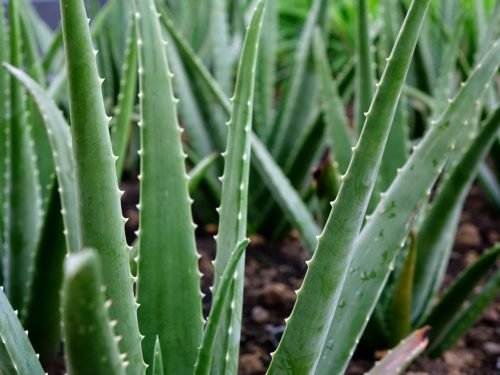
Aloe vera [Pixabay].
Plants for beginners
What if you don’t have the greenest of thumbs or your knowledge of herbalism is very light? Is there a plant you could start out with?
New Hampshire Herbalist Naomi Schoenfeld says a good first plant is Aloe Vera, both for how easy it is to grow and for its beneficial uses.
Rosemary Gladstar, one of the persons credited for the herbalism revival in the US, agrees. In her book, Medicinal Herbs: A beginner’s guide, she has this quote, “If you can’t grow aloe, then try plastic plants.” Ms. Schoenfeld says aloe soothes burns and speeds healing when you break off a leaf and apply the gel to the burn.
“Taken internally it can bring that same healing power to digestive irritations and inflammations, such as ulcers, and help with constipation,” says Schoenfeld.
Another reason Schoenfeld recommends the plant for beginners; it’s safe and there’s very little someone could do wrong with it.
Shelly Tomtschik, a Pagan Herbalist living in Wisconsin, suggests yarrow. She says it’s easy to grow in a pot and is very versatile. Tomtschik says that if you find some growing outside, you can just scoop some up and put it in a pot, and it’ll do well.
“I use it most often in a tincture for colds and flus, but the tincture can also be made into bug spray. My husband can’t wear DEET, so yarrow tincture works really well, combined with witch hazel,” say Ms. Tomtschik.
Another use for yarrow, says Tomtschik, is as a bandage, “Fresh, the leaves can be used as a bandage and stops bleeding quickly, even for, or especially for, deep cuts.”
Most herbalists will tell you to use caution in using or ingesting any herbs, especially if you are looking to self treat any medical conditions. They says that herbalism has different layers of skills and most people can learn enough to tend to the basic needs for themselves and family. They caution when in doubt, consult an herbalist.
Herbalists who have chosen it as a life focus can have incredible amounts of knowledge to share, experience with specific problems such as autoimmune disease, and time spent in apprenticeships or working directly in clinical settings.
In the U.S. there is no licensing body or government oversight of herbalists. But that, Schoenfeld explains, is a good thing.
“If herbalists were licensed, we’d be restricted to suggesting only very specific approaches permitted by the licensing bodies, much the way that medical doctors are finding their professional opinions coming secondary to insurance company decisions, and many traditional herb uses might be blocked,” says Schoenfeld.
The downside is that there isn’t a credential people can ask for in order to find a good herbalist. Schoenfeld says that most of the time people find good herbalists by word of mouth.
Another place persons can look, at least in the US, is through the American Herbalists Guild. They maintain a registry of members who meet training standards and length of time spent in practice.
The Wild Hunt is not responsible for links to external content.
To join a conversation on this post:
Visit our The Wild Hunt subreddit! Point your favorite browser to https://www.reddit.com/r/The_Wild_Hunt_News/, then click “JOIN”. Make sure to click the bell, too, to be notified of new articles posted to our subreddit.
