

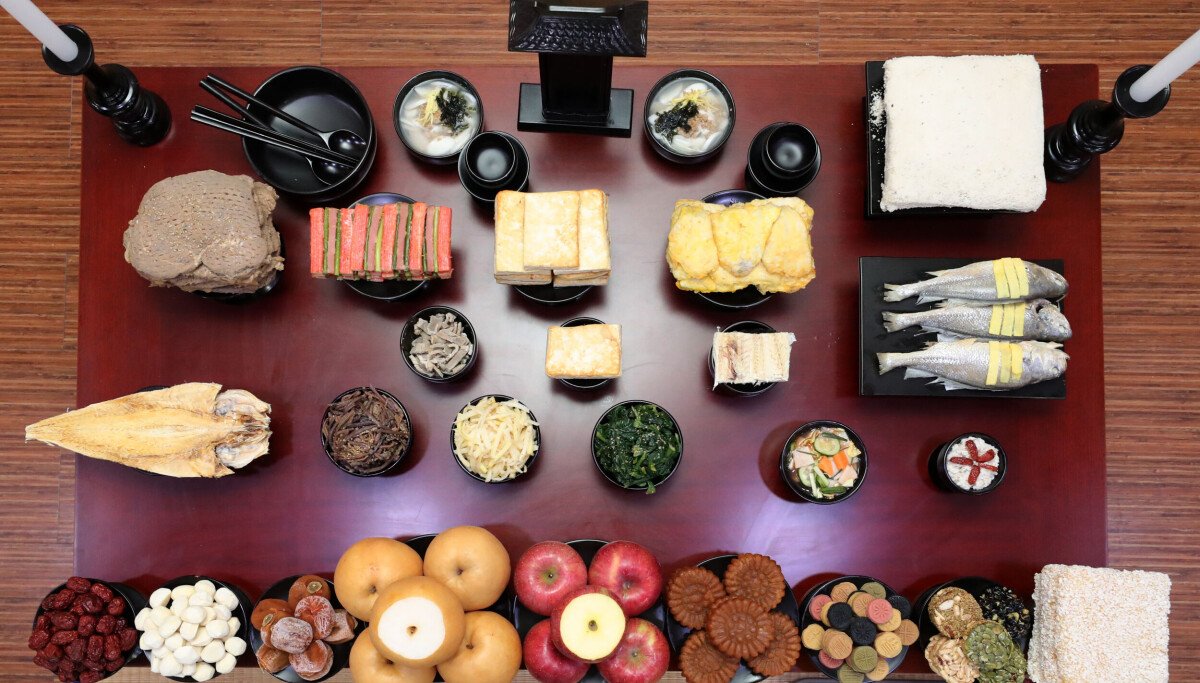
As in many countries, Korea’s culinary culture really comes alive during the holidays, including the upcoming Chuseok autumn harvest celebration.
Although many holiday traditions may have softened or been outright ditched as spiritual beliefs and social mores changed, what remains atop the tables of Korean families at Chuseok are delicious hansik(traditional cuisine) dishes along with some modern additions.
Many of these dishes are salty, meaty or greasy — which is what makes them so sinfully good, but also means you’ll want to show some restraint, lest your outfits feel a bit tight after the holidays.
Related Article
Chuseok is the harvest festival, but heat and drought threaten to leave fruit baskets light
No long holiday, no travel, no ‘tteokguk’: North Korea’s very different Lunar New Year
Staying healthy this Seollal: Tips for eating right while keeping tradition
Nutritionists recommend consuming cruelly moderate amounts of the richer dishes to keep off the pounds, but here are some foods that you can indulge in without feeling guilty — as well as some others to avoid if maintaining your figure is a priority.
What foods are usually served at Chuseok?
Every household has its own take on the Chuseok table — which was initially meant to honor ancestors. However, six staples are nearly universal nationwide: songpyeon(half-moon-shaped rice cake), namul(seasoned vegetables), grilled dishes, kimchi, fruit and liquor.
These staples alone would “suffice” for a Chuseok table, according to a 2022 announcement from Sungkyunkwan Confucian Association. The remark challenged the prevalent view that a wide variety of food makes for a better ancestral rite.
“Honoring one’s ancestors does not come from the number of dishes,” the Confucian organization said.
In fact, heavy, greasy dishes, commonly associated with Korean holiday meals, are discouraged in traditional teachings. Paying tribute to ancestors with greasy food goes against ritual propriety, according to the “Sagyejeonseo,” a philosophical treatise that focuses heavily on rites and protocols, written by Neo-Confucian scholar Kim Jang-Saeng (1548-1631).
Yet, the Confucian institution left room for flexibility — as long as family members agree, they can add meatier and oilier dishes to the table.
Which foods are healthier?
Once seated around the Chuseok table, one might not know where to start, as the sheer variety of dishes is likely to tempt the taste buds.
Between high-calorie dishes, namul and grilled fish offer lighter options for health-conscious people. Namul — typically made of marinated vegetables including cucumber, bean sprouts and bracken fern — is high in fiber, and fish provides plenty of protein with relatively less saturated fat.
However, nutritional balance must be considered. People should remind themselves that loading up on one particular dish could disrupt the balance between the five key elements: protein, calcium, minerals, carbohydrates and fat.
Choosing namul as a starter and moving on to relatively higher-calorie dishes would help people feel satiated sooner and prevent overeating. Boiled fish or meat is also often served, which counts as a great
Which foods warrant caution?
Sadly, the biggest dietary traps are often the most scrumptious. These include jeon dishes and hangwa(traditional Korean sweets).
Jeon refers to pan-fried foods or fritters. They are among the oiliest dishes as they absorb much of the oil poured into the pan while cooking.The most common and popular jeon are made of frozen pollack, Korean zucchini, thinly sliced meat and sweet potato.
“Korean holiday food contains high sodium, saturated fat and simple sugar, all of which can cause spikes in blood sugar level, blood pressure and neutral fat index,” nutritional epidemiology Prof. Shin Sang-ah of Chung-Ang University said. “In particular, rice cakes, jeon and hangwa are among the foods most likely to cause sharp swings in blood sugar. So people should control their intake.”
People should also be aware of what they are drinking.
A glass of clear liquor is traditionally placed on the Chuseok ritual table, symbolizing the bond between ancestors and their descendants. Soju, Korea’s spirituous liquor, often occupies this spot.
A bottle of soju has 600 calories — equivalent to two bowls of rice.
“When you eat food with liquor, the intake of both calories and fat increases altogether,” Prof. Shin added.
What are some good places to taste them, if not at home?
Nowadays, fully prepared and cooked dishes are available in traditional markets or even neighborhood side-dish shops, much to the relief of overworked families.
Vendors in traditional markets — namely central Seoul’s Gwangjang Market and western Seoul’s Mangwon Market and Gongdeok Market — offer a variety of fruits, vegetables and freshly fried jeon dishes. Even hypermarkets offer refrigerated jeon and marinated meat that need only a few minutes in the microwave or a pan before they are ready to serve.
Food-catering companies offer packages of Chuseok dishes priced from 210,000 won ($152) to 390,000 won for servings of three to eight people. Some promised deliveries on the first day of the Chuseok holiday, which falls on Sept. 24 this year.
Korean retailers did not forget those living alone. Major convenience store chains offer ready-to-eat holiday meals, from boxed meals to gimbap(seaweed rice rolls), jumeokbap(rice balls) and desserts.
GS25’s 6,900-won “Chuseok Japchae & Jeon” features donggeurangttaeng(Korean pan-fried meat patties), five-color skewers and japchae(stir-fried glass noodles) made with meat and mushrooms. Emart24 included three types of namul and mini yakgwa(a sweet honey cookie) in its boxed meal.
