

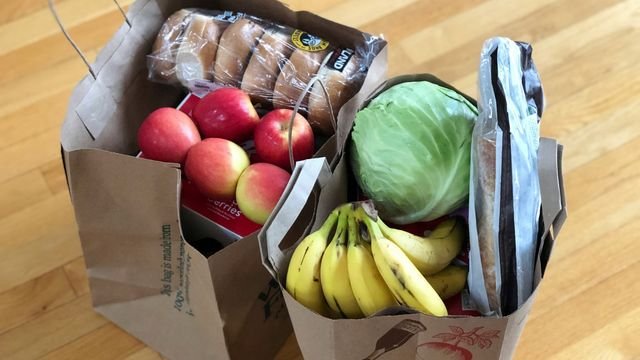
Even when foods are comparable, consumers believe the one with the shorter shelf life to be “more natural” and therefore, more healthy.
News Published: September 29, 2026
Original story from the University of British Columbia Sauder School of Business
Credit: Maria Lin Kim / Unsplash.
Listen with
Speechify
0:00
Register or log In for free to listen to this article
Read time: 3 minutes
Key Summary
- Nutrition experts regularly warn about the risks of eating ultra-processed foods and recommend more natural offerings
- A new study shows that many shoppers determine naturalness by looking at a food’s shelf life
- Items with a shorter shelf life tend to be seen as more natural and healthier, while those with a longer shelf life are considered more environmentally friendly and better for reducing waste
- Even when consumers are shown products with nearly identical ingredients and nutritional information, if naturalness is key they opt for items with a shorter shelf life
- The effect remains even when consumers are aware that the longer shelf life is only from improvements to packaging
- The researchers found consumers are using shelf life as a kind of shorthand in determining naturalness
- The findings could have major implications for food packaging and marketing
For years nutrition experts have warned about the many risks of eating ultra-processed foods: among them obesity, cardiovascular disease and diabetes. Instead, they advise that consumers opt for more natural offerings.
So how, then, are shoppers determining the naturalness of a food? According to a fascinating new study from the UBC Sauder School of Business, they’re using product shelf lives as a shorthand, even when they aren’t a reliable indicator.
For the study, titled Naturalness against environment-friendliness: The impact of shelf life on food perceptions and purchase decisions, researchers performed a series of experiments. In one, participants compared potato chips that had five-month and nine-month shelf lives, and rated the five-month chips as more natural and healthier, while those with the longer shelf life were considered more environmentally friendly and better for reducing waste.
In another, participants chose between pasta sauces that had one- and three-year shelf lives. When the researchers emphasized the importance of consuming natural foods, nearly 70 per cent chose the item with the one-year shelf life; when they emphasized the importance of protecting the environment, that number plummeted to 43 per cent.
Amazingly, even when participants were shown the only reason behind a product’s longer shelf life was better packaging (a high-performance seal on a mayonnaise jar), when naturalness mattered, they still opted for the mayo with a shorter life. Likewise, even when participants were shown two granola bars with nearly identical ingredients and nutritional information but different shelf lives, when naturalness mattered, they still opted for the granola with a shorter life.
The researchers believe consumers are using shelf life as a kind of mental shortcut to determine naturalness, and in the process may choose foods that are more likely to be wasted.
“We provide all the necessary information to make a rational choice. We provide ingredient lists. We provide nutritional facts. But it’s a lot to process,” explains UBC Sauder Associate Professor Dr. Yann Cornil, who co-authored the study with Dr. Dan Liu of Jinan University and Dr. Xiaobing Xu of Hainan University. Like shoppers in a supermarket, he says, study participants instead tend to rely on “peripheral cues,” including shelf life, packaging and marketing, to reach conclusions about whether a product is natural or not.
The study is especially timely, given that roughly 46 per cent of Canadians’ daily caloric intake is from ultra-processed foods. In the U.S. that number is even higher, at roughly 55 per cent. Often made from substances extracted from sugars, oils and starches, the foods are dramatically altered from their natural state and can be high in sodium, saturated fat, or added sugar, and lower in nutrients.
Dr. Cornil says there’s been a shift in nutrition science, from concern over foods that are high in fat and sugar to ones that are highly processed. Now, when consumers think of a food as natural, they will generally consider it healthy, and they see foods with longer shelf life as less natural.
“To some extent they are correct, because the more you extend the shelf life of a food, the more likely it went through this ultra-processing technique… but not necessarily,” says Dr. Cornil. Packaging has improved dramatically, he explains, and better packaging has improved conservation, just like refrigeration did 60 years ago.
Still, consumers overestimate the relationship between shelf life and naturalness, and that can lead to unnecessary food waste.
“By looking for natural foods, consumers tend to prefer foods with a shorter shelf life, even though foods with a longer shelf life could be just as good, and just as healthy and natural, as we show in the paper,” says Dr. Cornil. “So by trying to choose natural foods, they might run the risk of choosing foods they will eventually waste because they have too little time to consume them.”
Dr. Cornil says consumers regularly misunderstand shelf life, and toss foods that are still fine to eat. As a result, some manufacturers are even indicating on their packaging that foods can still be safely consumed after their best before dates, although he notes that less scrupulous manufacturers might take advantage of the fact that consumers have to repurchase their products more often. Improvements to packaging are also reducing waste, but as the paper shows, consumers aren’t always sold on the idea.
The study is the first of its kind to demonstrate the tension between environmental friendliness and naturalness, as well as the power of the shelf-life heuristic, that is, the mental shortcut consumers use to determine naturalness.
“The fact that we still find this effect even when we provide nutrition information, and even when we make consumers understand that packaging is responsible for the longer shelf life and not processing, is really interesting,” says Dr. Cornil. “And we go pretty far in showing the strength of this misleading heuristic.”
Reference: Liu D, Cornil Y, Xu X. Naturalness against environment‐friendliness: The impact of shelf life on food perceptions and purchase decisions. J Consum Psychol. 2026;36(4):431-450. doi: 10.1002/jcpy.70034
This article has been republished from materials linked above. Note: material may have been edited for length and content. For further information, please contact the citede more of our trusted coverage
