

Melissa Pasanen
Updated Aug. 22, 2014, 10:26 a.m. ET
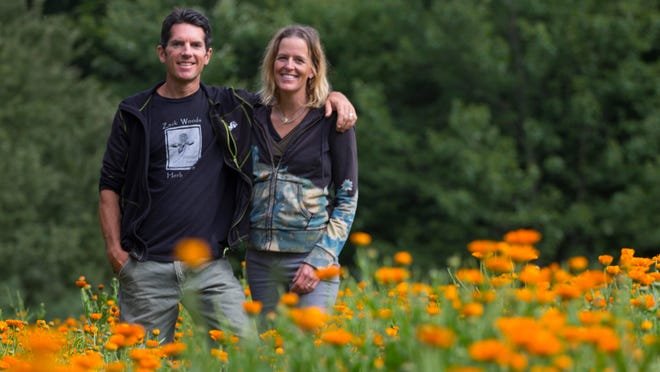
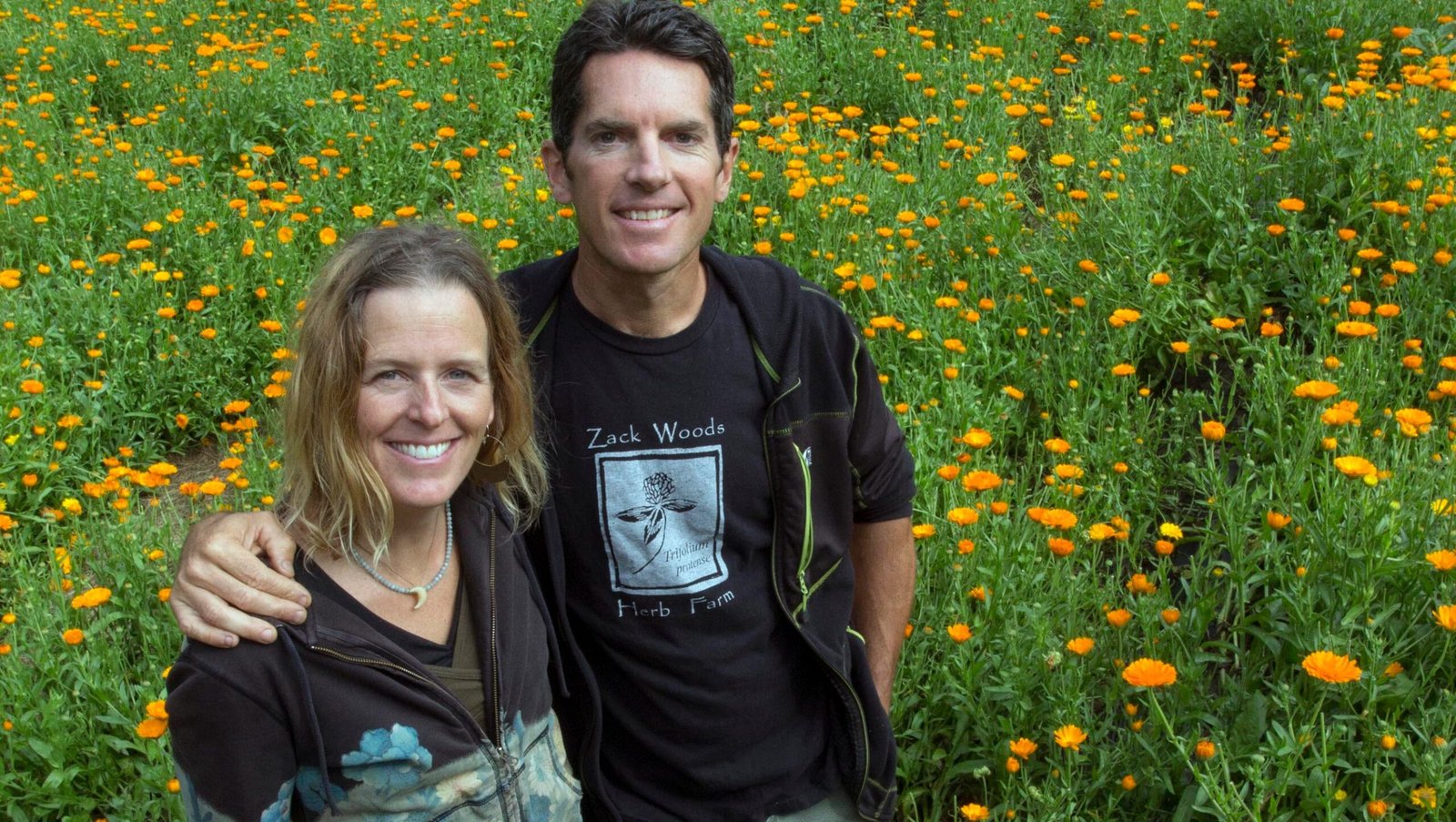
Hyde Park – Standing recently in a neatly tended field of orange-blossomed calendula, Melanie Carpenter looked over at her family’s sprawling vegetable garden nearby and said regretfully, “It’s a mess. We just don’t have the time to manage it.”
The couple, with help from a crew of five, cultivates a variety of certified organic herbs and plants on 10 acres of land.
Over the last 16 years, they have built their medicinal herb business from its first year sales of 100 pounds of dehydrated herbs to last year’s total of 2 tons.
While many people believe that eating your vegetables will help keep you healthy, the Carpenters believe strongly that regularly consuming certain types of herbs can do the same.
They are clear about two things. The first is no, they do not grow that kind of medicinal herb (marijuana), pre-empting a question they are frequently asked.
The second is that, like many traditional cultures around the world with a respect for the health benefits of herbs, they believe that food is some of the best medicine.
“We use herbs to build wellness,” Melanie Carpenter explained. “One of the ways we do that is to utilize herbs as food, to include them in recipes. You really want to incorporate them in your daily life in ways that taste good and are healing, nutritive (nutritious) and restorative.” Often herbs work cumulatively, the couple said, so it’s good to eat them as part of your regular diet.
The golden petals of the calendula in which they were standing, for example, are used both topically in salves to soothe the skin and in teas, like Zack Woods’ Rejuvenation Tea. Calendula has a pleasant “sunshiney” flavor, Melanie Carpenter said, and is believed by some to have lymphatic cleansing properties, making it of particular interest to those in treatment for cancer.
Ashwaganda, another leafy green plant in the same field, is described by the Carpenters as an adaptogen, a plant that helps the body adapt to physical, chemical and emotional stresses. The root is used to make a tea which is traditionally served in India with milk, honey and chai spices, Melanie Carpenter said.
Growing a row over was purple-flowered tulsi, another adaptogen that is commonly called Sacred Basil, she explained: “In the Hindu tradition, it is a most revered plant. Many homes have pots of tulsi as protective entities.”
Tulsi’s aromatic flavors hinting of basil and clove also lend themselves well to tea. In addition, they complement the spices and other herbs used in Thai or Indian food, the couple said. One of their crew members likes to stir finely chopped tulsi into jasmine rice with sautéed onions and garlic and it pairs well with lemongrass, Jeff Carpenter added.
“We’re growing crops that have been used for millennia by traditional cultures as their mainraditional form of healing primarily for preventative health care, but also as appropriate for certain acute situations,” he summarized. “There are a lot of different ways to use herbal products, but I like to eat my medicine.”
The Carpenters who have an 8-year-old daughter, first met as teenagers in Barre where Melanie was best friends with Jeff’s younger sister. He came from a multi-generation dairy farming family and spent many happy hours with his grandfather fishing on a pond in Zack Woods, a few miles away from the Carpenters’ current farm, named to honor those memories.
Melanie Carpenter grew up in East Barre at Sage Mountain, home-base for her stepmother, Rosemary Gladstar, a noted herbalist practitioner, teacher and writer. “People call her the fairy godmother of modern western herbalism,” Jeff Carpenter elaborated.
Melanie and her sister helped Gladstar with her work and soon started creating their own herb-based tinctures and salves under the brand, Sage Mountain Herb Products. “I got steeped in the magic,” she said with a smile.
Business grew and Jeff Carpenter pitched in when Melanie’s sister moved on. They were at the point where major national retailers like Whole Foods Market were interested, Melanie Carpenter said, “but we realized we didn’t want to focus our energies there.”
The herbs they were using to make their products were being imported mostly from huge farms outside the country, the couple said. “We saw the need for high quality, locally grown herbs,” Melanie Carpenter said.
Jeff Carpenter also admits that the farming life appealed because of the flexibility it provided during skiing season.
“Not all rainbows and unicorns.”
It’s been a long, gradual climb to self-sufficiency, the Carpenters said.
This is Melanie’s second full-time season on the farm after leaving her job as a middle school principal. “We’ve gotten to the point where we can support ourselves,” Jeff Carpenter said. “We’re making a living but it’s not all rainbows and unicorns.”
Zack Woods sells most of its herbs in dried form direct to customersds markets, and also to companies that make herbal products like Burlington’s Urban Moonshine, a nationally distributed brand of bitters made with herbs, roots and other natural ingredients. About 70 percent of Zack Woods’ business is through wholesale accounts and about 60 percent is sold to customers in Vermont
In the farm’s passive solar drying shed, racks of sweet-smelling but slightly bitter-tasting white and yellow chamomile flowers were earmarked for Urban Moonshine.
“If you ever read ‘Peter Rabbit,'” Melanie Carpenter said, “you might remember how agitated he was from his run-in with Mr. McGregor and his mom made him calming chamomile tea.”
In another shed, about 450 pounds of garlic was drying, grown by Zack Woods for Green Mountain Garlic in Waterbury. Garlic is a “good example of food as medicine,” Jeff Carpenter said, ticking off a long list of its potential benefits from helping to lower blood pressure and cholesterol and stimulating blood flow to the digestive system, to anti-microbial and anti-viral properties.
Jeff Carpenter, who is of Italian heritage, has no trouble figuring out ways to eat plenty of this medicine in eggplant Parmesan and spaghetti sauce. He also likes to take a whole bulb, slice off the top, spread the cloves and drizzle in a little olive oil before putting it on the grill to slow-cook and then eating the soft, caramelized cloves with grilled steak.
Two of Rosemary Gladstar’s signature recipes feature garlic, Melanie Carpenter noted: pickled garlic with tamari, honey and vinegar and something called Fire Cider, a traditional tonic featuring ginger, horseradish, garlic, hot peppers, rosemary and turmeric among other ingredients.
In the farm’s small barn, with storage upstairs and packing room downstairs, bags of milky oats, angelica root and a big barrel of the blend of six herbs and plants that make up the farm’s Rejuvenation Tea were waiting to be shipped out.
Angelica, Jeff Carpenter explained, is primarily used to aid digestion but is also credited with mild immune-enhancing properties. It has a distinctive anise/licorice scent and, his wife added, almost a borage or celery undertone. It is sometimes featured candied in desserts, or as a flavoring for custard or ice cream. Melanie Carpenter enjoys a cordial she makes with angelica, anise, burdock root and orange and lemon peel steeped in brandy and then sweetened with honey, maple or simple syrup.
Leaving the packing room, Jeff Carpenter carefully pulled the curtains shut. “We’re crazy about light,” he said, noting that nothing will destroy the potency of dried herbs and plants more quickly than sunlight.
Right outside the barn door grew more neat rows including some of the herbs and plants for the Rejuvenation Tea: milky oats, nettles and lemon balm.
A small tender leaf of nettle crushed to minimize its stinging power was sweet and juicy. Stinging nettles, Jeff Carpenter said, “are one of the most nutritive plants, up there with sweet potatoes. They have lots of minerals, vitamins, and chlorophyll.”
In addition to using them dried for tea, Melanie Carpenter said the family enjoys young steamed or sautéed nettles. She uses them in place of spinach in the savory Greek layered spanakopita and also likes to make a pesto using nettles instead of basil.
Passing by a fragrant bed of lemon balm, she observed that the citrusy herb works well in many recipes and is supposed to be “very nourishing to the nervous system, uplifting and helpful to combat seasonal affective disorder and also anti-viral. They say it brings joy into your body.”
The Carpenters’ biggest challenge, they said, has been keeping work and life in balance.
“We cannot even begin to keep up with demand,” Jeff Carpenter said, “but we don’t want to grow more; we believe it would compromise both the quality of our products and our lifestyle.”
They also believe there is significant opportunity for others in Vermont and around the country to develop small, sustainable medicinal herb farms.
“It’s really sad that 75 percent of the herbs used in medicinal herb products come from gigantic farms far away,” Jeff Carpenter said. “So few people are doing what we’re doing. There is a real opportunity, but the learning curve is relatively steep.”
The couple credits Rosemary Gladstar for opening doors for them when they were starting out in a volatile and competitive market, which can also require sophisticated testing of herbs to measure nutrients.
The Carpenters are trying to share their own knowledge and experience to help others follow their path. They have co-authored “The Organic Medicinal Herb Farm,” due out from Chelsea Green Publishing in spring 2015. With collaborator Pam Hathaway, they have also been developing a Vermont Herb Growers Co-Op, which recently received some grant funding.
They hope the book and the new co-op attract the interest of vegetable farmers looking to diversify as well as others who might want to specialize in herbs. “There’s such biodiversity in our country,” Melanie Carpenter said. “There should be a network of small farms all over growing what they can grow well.”
“Although herbalism and herb-farming is still considered fringy by some,” her husband added, “it’s becoming much more mainstream.”
Contact Melissa Pasanen at mpasanen@aol.com and follow her on Twitter atwww.twitter.com/TasteofVermont
Rosemary Gladstar’s Fire Cider
½ cup fresh grated ginger root
½ cup fresh grated horseradish root
10 cloves garlic, crushed or chopped
Several sprigs of fresh rosemary or 2 tablespoons dried rosemary leaves
¼ cup raw local honey, plus more to taste
Put ginger, horseradish, onion, garlic, peppers, lemon zest and juice, rosemary and turmeric in a quart canning jar. Cover with apple cider vinegar by about two inches. Use a piece of natural parchment paper or wax paper under the lid to keep the vinegar from touching the metal. Shake well. Store in a dark, cool place for one month and shake daily.
After one month, use cheesecloth to strain out the pulp, pouring the vinegar into a clean jar. Be sure to squeeze as much of the liquid goodness as you can from the pulp while straining. Add ¼ cup of honey and stir until incorporated. Taste your cider and add another ¼ cup until you reach desired sweetness. Fire cider should taste hot, spicy and sweet. It is great as a winter time tonic and as a remedy for colds and coughs. Often people use it as salad dressing or on rice or steamed vegetables.
Note: Gladstar specifies all ingredients should be organic.
Rosemary Gladstar’s Pickled Garlic
Start with about 1½ to 2 pounds whole garlic bulbs. Remove garlic skins, being careful not to nick the cloves. If you do, the cloves will turn brown/black where the nicks are during the pickling process but this does not interfere with the end product, just in how it looks. Fill a quart canning jar with peeled cloves. Cover cloves with a mixture of half tamari soy sauce and half apple cider vinegar. Cap and let sit for six weeks in a cool, dark place.
Strain garlic from this mixture and save half of the tamari/vinegar mixture. (Don’t discard the other half; it is great as a marinade or base for salad dressing.) To the saved liquid, add an equal amount of honey. If necessary warm the two together slightly just to combine. Cover garlic with this combination (making sure no cloves stick out of the liquid), re-cap and let sit for another six weeks. The longer it sits the mellower and more flavorful it becomes. Occasionally you will see bubbles of air in the jar as the garlic is pickling in the tamari/vinegar solution. Open the jar, if you see this, and release the gas.
Note: Pickled garlic can sometimes turn blue in reaction to the vinegar. This is unsightly but should not be harmful. Pickled garlic makes a great condiment and also pureed as an ingredient in marinades and salad dressings.
Herb-drying tips from Zack Woods Herb Farm:
Cut herb stalks off above the plant’s root ball.
Brush off excess dirt, but don’t wash.
Tie loosely in small bundles and hang from rafters or closet rods making sure there is plenty of air flow within and around bundles.
Protect drying herbs from light. (As beautiful as they are to look at, it’s better to dry them in the dark)
Herbs are dry when they “snap, crackle and pop.” Make sure center of blossoms are completely dry by breaking them open.
Store in airtight, light-blocking containers; glass is best, or stainless steel is fine, too.
Note: You can also dry herbs flat on old window screens making sure there is good air circulation around and through them, or in a food dehydrator.
