

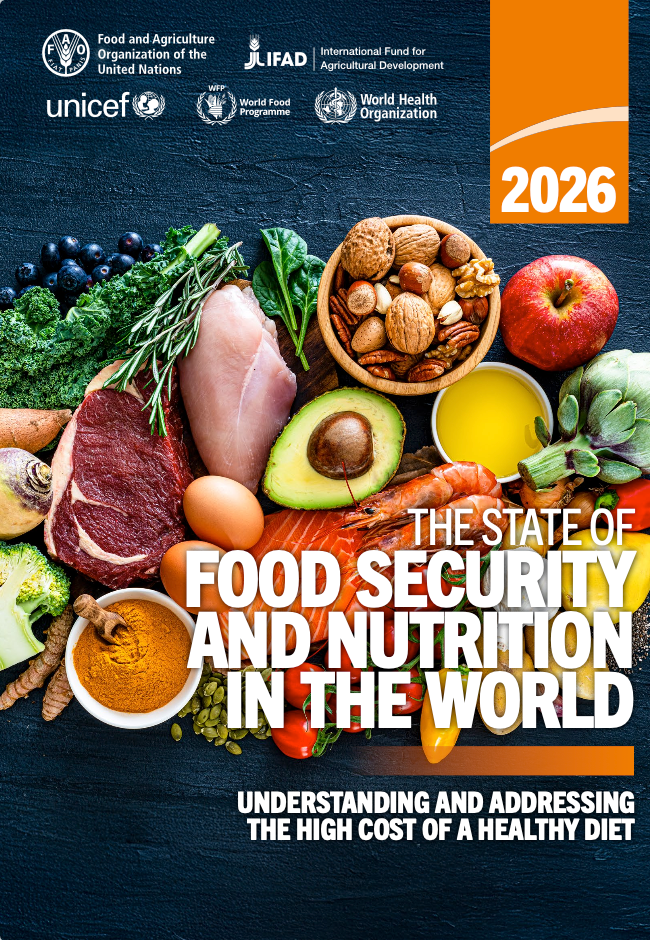
The State of Food Security and Nutrition in the World 2026 (SOFI 2026) is the latest edition of an annual global report examining hunger, food security and nutrition. The report is published by the Food and Agriculture Organization of the United Nations (FAO) together with its UN partner organizations.
The 2026 edition focuses on an important question: why is a healthy diet still too expensive for many people, and what can be done about it? Its theme is “Understanding and addressing the high cost of a healthy diet.”
Why the Cost of a Healthy Diet Matters
Having enough food available does not necessarily mean that everyone can afford a healthy diet.
A nutritious diet generally requires access to a variety of foods, including vegetables, fruits, legumes, whole grains and appropriate sources of protein. When these foods are too expensive, households may rely more heavily on cheaper foods that do not provide the same nutritional variety.
The 2026 report examines how the cost and affordability of healthy diets affect efforts to reduce hunger, food insecurity and different forms of malnutrition.
Food Security Goes Beyond Hunger
Food security involves more than simply having enough calories. People need reliable access to sufficient, safe and nutritious food.
Food insecurity can also affect people’s ability to maintain a varied diet. Economic pressures, food prices and disruptions within food systems can all influence what foods households are able to purchase.
This makes affordability an important part of improving nutrition worldwide.
Understanding the High Cost of Healthy Food
The report examines the factors that influence the cost of a healthy diet, including economic conditions and agricultural and food-system value chains.
Understanding these factors can help policymakers identify where changes may improve access to nutritious foods.
For example, food policies can consider not only how much food is produced, but also the availability, affordability and nutritional quality of that food.
Why Food Systems Matter
Agriculture and food systems play an important role in determining what foods are available to consumers and how much those foods cost.
Changes throughout the food supply chain can influence prices, from agricultural production through processing, transportation and distribution.
Building food systems that make nutritious foods more accessible can therefore contribute to broader efforts to improve nutrition.
The Connection Between Affordability and Nutrition
When healthy diets are unaffordable, people can face difficult choices about what to eat.
This is particularly important for households experiencing economic hardship. Improving the affordability of nutritious foods can help create better conditions for people to maintain healthy eating patterns.
The report places this issue within the broader goal of achieving Sustainable Development Goal 2, which aims to end hunger, achieve food security and improve nutrition by 2030.
What Can Be Done?
Addressing the cost of healthy diets requires action across food systems and public policy.
Potential approaches include:
- Improving access to nutritious foods
- Strengthening food-system resilience
- Supporting sustainable agricultural production
- Improving nutrition programs
- Addressing economic barriers to healthy diets
- Using better data to identify populations most affected by food insecurity
- Designing policies that consider both food availability and nutritional quality
No single intervention can solve global food insecurity. Progress requires cooperation among governments, communities, farmers, businesses, development organizations and international institutions.
Looking Toward 2030
With 2030 approaching, the challenge of ending hunger and all forms of malnutrition remains significant.
SOFI 2026 highlights the importance of understanding why healthy diets remain unaffordable and how food systems and policies can address that problem.
Making nutritious food more affordable could help improve food security while supporting healthier dietary patterns.
The Bottom Line
The State of Food Security and Nutrition in the World 2026 emphasizes that food security is not only about producing enough food. People also need to be able to afford and access nutritious diets.
Understanding the causes of high healthy-diet costs can help policymakers develop more effective strategies for reducing hunger, food insecurity and malnutrition around the world.
