
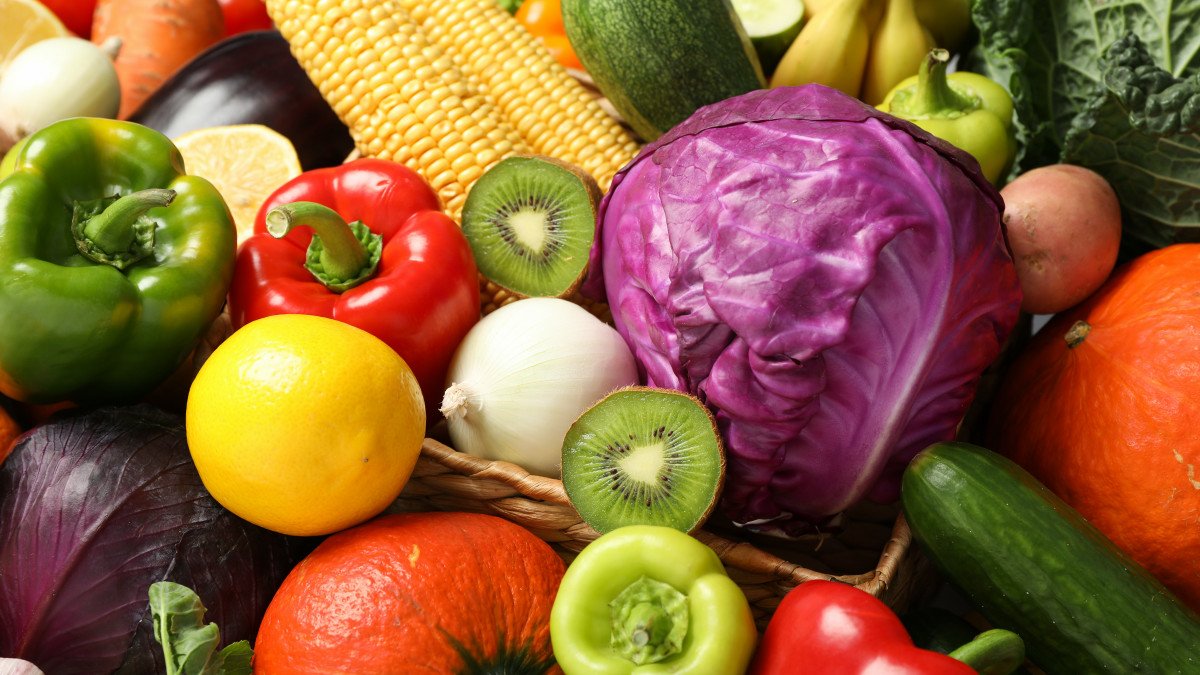
Dietary fiber is a food component that is not broken down by human digestive enzymes and offers various health benefits. While vegetables and fruits are rich in dietary fiber, new research has revealed that the fiber in vegetables and fruits is more abundant in the parts that are ‘generally discarded’ than in the edible parts.
Full article: The dietary fiber content of fruit and vegetable kitchen preparation waste and UK consumers’ dietary fiber-related attitudes regarding its consumption
https://www.tandfonline.com/doi/full/10.1080/09637486.2026.2734852
Eating ‘root-to-tip’ could help your health and the planet | King’s College London
https://www.kcl.ac.uk/news/eating-root-to-tip-could-help-your-health-and-the-planet
You Might Be Throwing Out The Healthiest Parts of Fruit And Vegetables, Study Shows : ScienceAlert
https://www.sciencealert.com/you-might-be-throwing-out-the-healthiest-parts-of-fruit-and-vegetables-study-shows
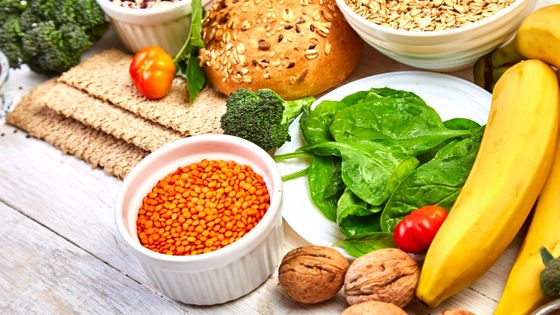
Dietary fiber offers several benefits, including regulating blood sugar and cholesterol levels, preventing lifestyle-related diseases such as high blood pressure, obesity, and diabetes, and improving gut health. A diet rich in dietary fiber has been linked to a reduced risk of cardiovascular disease, certain cancers, and premature death, making adequate fiber intake crucial for a healthy diet.
However, most people do not meet the recommended daily intake of dietary fiber. For example, in the UK, adults are recommended to consume 30g of dietary fiber per day, but only about 4% of the population meets this requirement. In contrast, the Japanese Dietary Reference Intakes (2025 edition) recommend that adults aged 18-74 consume 18-22g of dietary fiber per day.
Therefore, a research team led by Rachel Gibson, associate professor of nutrition at King’s College London in the UK, investigated the amount of dietary fiber contained in the edible parts of vegetables and fruits, as well as the amount of dietary fiber contained in the parts that are usually discarded.
The study focused on 12 types of vegetables and fruits:
beets (table beets) , bell peppers, broccoli, butternut squash (a type of pumpkin ), cauliflower, celeriac , curly kale (a type ofkale) , fennel, kiwi, leek, pineapple, and watermelon. The research team investigated the amount of dietary fiber in the edible parts of these vegetables and fruits that are commonly eaten, as well as the amount of dietary fiber in the peels, seeds, and stems that are usually discarded.
The analysis revealed that for 10 of the vegetables, excluding broccoli and fennel, the discarded portions contained more dietary fiber by weight than the edible portions. ‘There was a surprising difference in dietary fiber content between the parts we eat and the parts that most people throw away,’ Gibson said.
The three fruits with the largest relative differences in dietary fiber content between the edible and discarded parts were pineapple, watermelon, and butternut squash. Pineapple had 453% more dietary fiber in its rind and core than in the flesh, watermelon had 425% more in its rind, and butternut squash had 326% more in its rind and seeds.
On the other hand, the amount of dietary fiber in broccoli stems is said to be about 28% less than in the florets (the dark green, fluffy part) that are commonly eaten, meaning that most people are already eating the fiber-rich parts on a regular basis.
Furthermore, the weight of the parts that are normally discarded, as analyzed in this study, accounted for 25-48% of the total weight of agricultural products. Gibson commented, ‘This means that people are throwing away a significant portion of the agricultural products they buy. And these parts could potentially help address our fiber deficiency.’
Of course, even if the discarded parts like the peel and seeds are nutritious, that doesn’t mean they’re tasty. Balaj Baika, a gut physiologist at King’s College London and co-author of the paper, said, ‘The important thing is that we’re not recommending that you eat ‘100g of butternut squash peel and seeds’ to increase your fiber intake. Rather, it’s about how we can increase our fiber intake in a simple and sustainable way by making effective use of often-overlooked parts of fruits and vegetables in our daily diet.’
The research team also conducted a focus group of 40 faculty and students from King’s College London to test the concept of eating parts that are normally discarded. The results showed that while some people are aware of the dietary fiber contained in discarded parts, they feel psychologically resistant to eating these parts.
Georgia Brown, lead author of the paper and research assistant at King’s College London, said, ‘Interestingly, when participants considered adopting the habit of eating ‘root to leaf,’ they were more motivated by nutritional benefits, particularly fiber content, than by environmental sustainability.’ The research team suggested that promoting consumer education about the nutritional benefits of eating even the discarded parts of vegetables and fruits could help overcome negative preconceptions.

Research results that stress is reduced if you continue to eat a lot of fermented foods and dietary fiber
Eating more fruits and vegetables is good not only for the body but also for mental health
An unhealthy breakfast is just as bad for your child’s school performance as skipping breakfast
Meat eaters are more likely to live to 100 than vegetarians
It has been found that a decline in pollinating insects is causing a decrease in farmers’ income and a deterioration in their nutritional status.
What kind of houseplant should I choose to improve mental health?
What is really a ‘healthy diet’? What I learned by scrutinizing the research for the past 40 years
Iron in red meat increases risk of type 2 diabetes by 26%



Nov 04, 2026 12:05:00
in Free Member, Science, Food, Posted by log1h_ik
