

The root-to-tip revolution! An A-Z of how to eat plants in full – for extra flavour, fibre and savings
If you discard the peels, skins, stalks and seeds when consuming fruit and vegetables you are missing out on a lot of value. Here’s what to incorporate into your diet – and what to avoid
Do you peel your potatoes, deseed your squash and core your cauliflower? <a href="https://www.kcl.ac.uk/news/eating-root-to-tip-could-help-your-health-and-the-planet” rel=”nofollow noopener” target=”_blank”>A study by King’s College London, published last month in the International Journal of Food Sciences and Nutrition, found that people who routinely discard peels, skins, stalks and seeds when preparing fruit and vegetables are missing out on a valuable source of dietary fibre. Ten out of the 12 types of produce the researchers analysed had higher levels of fibre in the scraps than in the flesh. Eating these often overlooked parts could help address the global dietary fibre deficit and tackle food waste, they say. Here, experts share their advice on how to cook and eat “root to tip”.
A is for asparagus butts
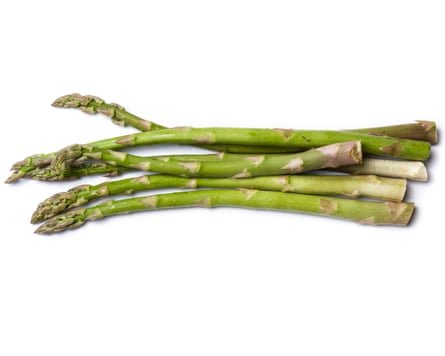
The tough ends of asparagus are traditionally discarded, but they have plenty of flavour. The chef Tom Hunt, who writes the Guardian’s Waste not column, suggests freezing them until you have enough to make soup (you’ll need to blend and ideally sieve it); or blanching them and whizzing them into a salad dressing or flavoured butter.
Why go to such effort? “Leftovers are a valuable source of fibre and worth incorporating into meals, especially given that 96% of adults do not meet the recommended daily intake of 30g of fibre,” says Sammie Gill, a senior nutrition scientist at the British Nutrition Foundation. But fibre is not the only benefit. “Peels, stalks and seeds are also a rich source of plant chemicals, such as polyphenols. Studies show that different polyphenols are linked with different health effects, from brain health to metabolic health.”
B is for beetroot skin
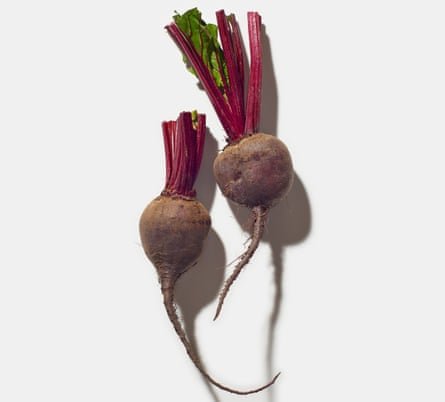
The King’s College study found that vegetable skins contain more fibre than the flesh: 40% more in the case of beetroot, and 84% more for celeriac. There is no need to peel these and other root vegetables, tubers and rhizomes, including potatoes, carrots, parsnips, turnips, jerusalem artichokes, radishes and ginger – simply give them a good wash. It’s a win-win: quicker to prepare and more nutritious.
If you prefer to peel veg for any reason – perhaps for a smoother mash or puree – you can bake the peelings with some oil and seasoning to make vegetable crisps.
C is for cauliflower core
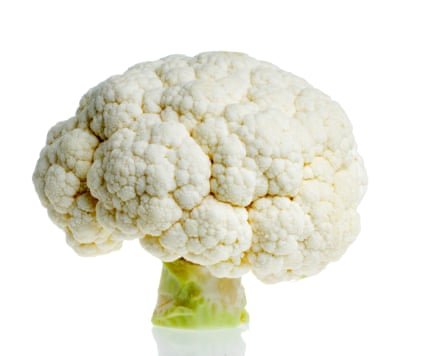
A cauliflower’s core and leaves contain 112% more fibre than the florets, according to the study. Adam Handling, a Scottish chef with Michelin-starred zero-waste restaurants in Cornwall and London, says the humble cauliflower is one of his favourite things to cook. “I love ingredients that give you a lot to work with. It’s about looking at an ingredient as a whole, rather than just taking the bit you need,” he says. “People often throw away the leaves and stalks, but they’re full of flavour. Roast them, pickle them or ferment them.” (More on fermenting, below.)
Tom Heywood, the chef-owner of Pignut & the Hare, a sustainable restaurant in Scawton, North Yorkshire, says he grates the core into couscous and rice. Oddbox, a fruit and veg box company, suggests making a cauliflower cheese with florets, stalks, leaves and all.
D is for drying
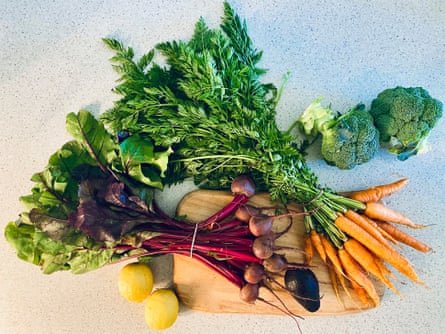
Heywood has a clever way of using up vegetable odds and ends. He spreads, say, carrot offcuts out on a tray, puts them into the oven on its lowest setting, and leaves them for several hours to completely dry out. He then blitzes the dried carrot into a powder, ready to sprinkle over dishes for an instant hit of earthy sweetness (and to add a vibrant orange colour).
E is for experimenting
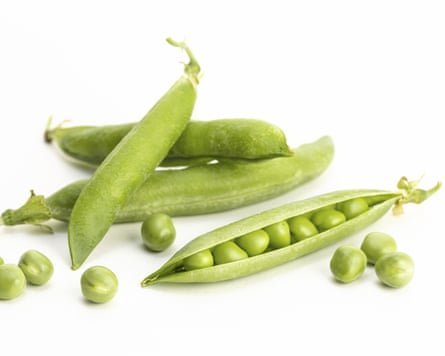
“A lot of the parts that people see as ‘waste’ are actually great ingredients in their own right; you just need to treat them with a bit of imagination,” says Handling, who has written a cookbook called Why Waste?. “Start with one ingredient, experiment and see what you can create.” Pea pods can be used in a risotto, for example, and banana skin turned into a chutney.
“Not everything works, and that’s part of cooking,” says Handling. “Some stalks can be too fibrous, or you might get something that’s too sour or a texture that just isn’t right. I don’t see that as wasted effort – you learn something every time.”
F is for fermentation
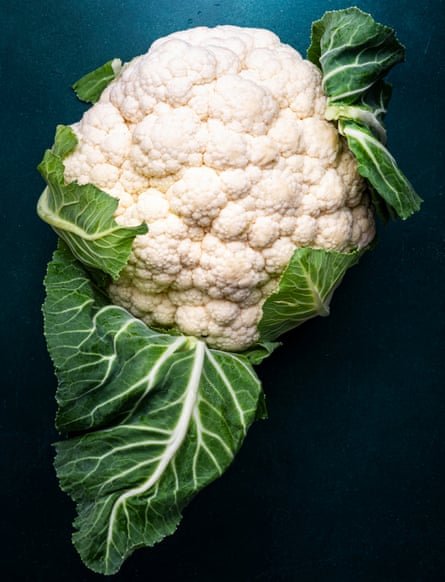
“Fermentation is particularly exciting because it can completely transform something that might otherwise be thrown away,” says Handling. “Cauliflower leaves can become kimchi and leftover carrots can become a fermented slaw. You’re extending the life of an ingredient while creating something with a completely new flavour profile.” Hunt has a simple recipe for a gut-friendly vegan kimchi using vegetable scraps.
G is for greens
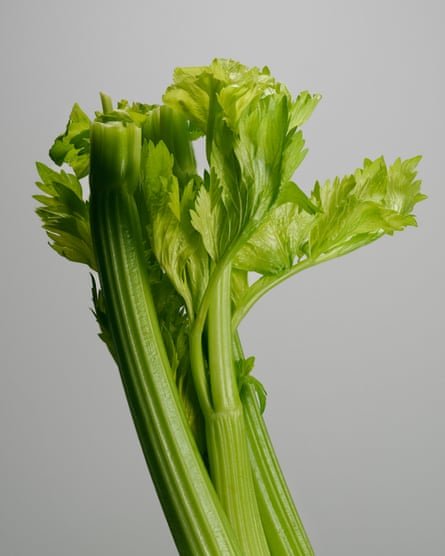
Many vegetables have leaves that are commonly discarded before they even reach the supermarket shelves. Greengrocers and markets are more likely to sell leafy produce. Some, such as celery leaves, can be eaten raw in a salad; others, such as carrot tops, can be blitzed into a pesto; and certain kinds, such as beetroot leaves, need cooking. “Beetroot leaves are a bit like chard,” says Heywood, who simply blanches and dresses them.
H is for herb stalks
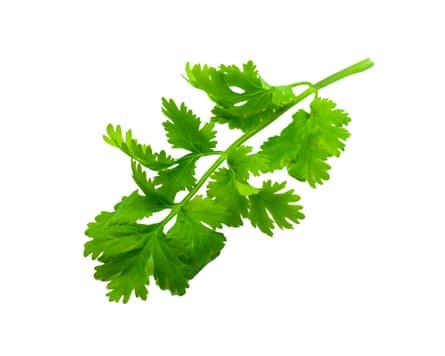
With herbs, conversely, people often use the leaves and discard the stems. But soft herbs such as parsley and coriander can be used in their entirety. Finely chop the stems and add near the start of cooking with any other aromatics. Even woody stems such as thyme and rosemary can go into stews or traybakes for flavour (remove them before eating).
I is for intensity
“There is often more flavour in the skin and leaves,” says Heywood. He gives the example of horseradish – many people peel it before grating, losing the most fiery, intense taste.
J is for jam
Jam is a good way to use up and preserve fruit scraps, but Heywood also makes a sweet and sour fennel jam by cooking the tough outer leaves with salt, sugar and vinegar, and serves it with fish. Sweet root vegetables and squash also lend themselves well to jam, while more savoury scraps can go into chutney.
K is for kiwi skin
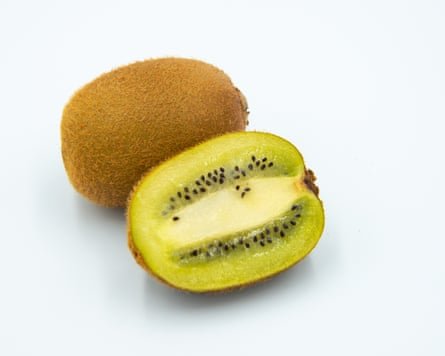
People are often put off by its furry texture, but the King’s College study found there is 195% more fibre in kiwi skin than in its flesh, so it’s worth trying to get used to it. There is no need to peel other thin-skinned fruit, either, such as apples, pears and figs. Speaking of figs, Handling also uses their leaves to make cordial and ice-cream.
L is for leek tops
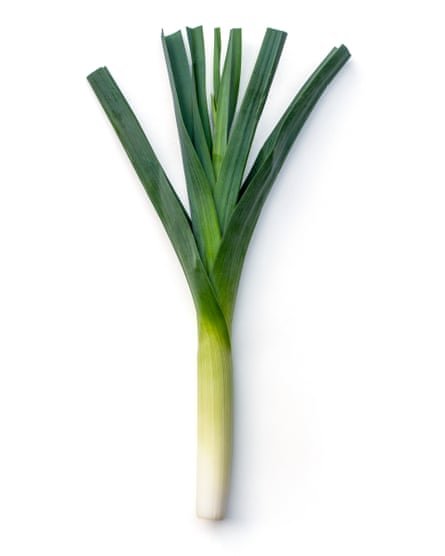
Most of us use only the tender part, but there is 77% more fibre in the tops and roots than in the rest of the leek, according to the study. (Dirt can get trapped between the layers, so give them an especially good wash, and you need to cook them a bit longer.) Heywood uses the tops of leeks and spring onions to infuse oil, then drizzles it on to dishes for an extra layer of allium flavour.
M is for mango pits
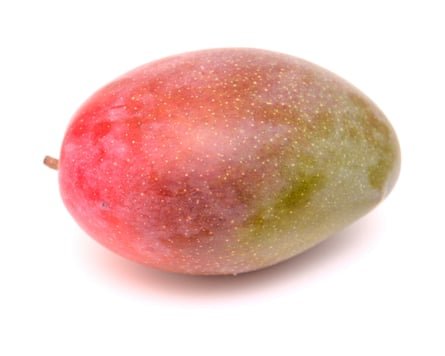
Anne-Marie Bonneau, a Canadian cookbook writer known as the Zero-Waste Chef, suggests using mango peels and pits to make a fermented drink called kvass, or to make a fruit-scrap vinegar. “Mango pits are always covered in a bit of residual fruit,” she says, and you can add peach and cherry pits, strawberry cores, peels – “all the fruit scraps that you’d ordinarily compost”. Hunt boils his mango skin and pit with sugar and water to make a coulis.
N is for nettles
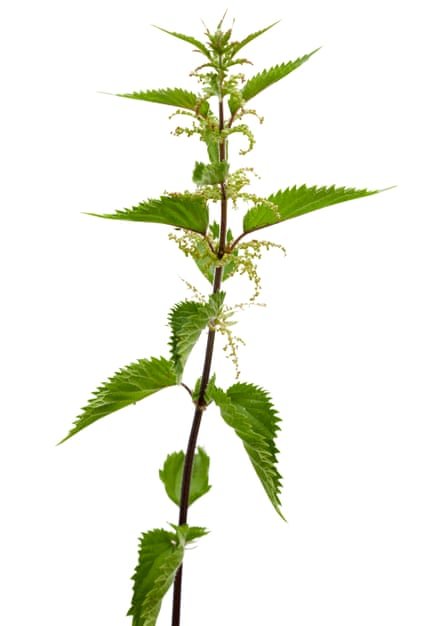
Root-to-tip chefs don’t just use the parts that others might throw away; they also tend to use ingredients you might not think of eating in the first place. The current menu at Pignut & the Hare features foraged herbs, wild garlic, meadowsweet and nettles. Heywood, who has co-written a book called The Forager’s Table with his wife, Laurissa, is particularly passionate about nettles. “They have a very similar taste to matcha green tea, and an amazing colour,” he says. In the UK, they are best picked in early spring (wearing rubber gloves) and can be cooked like spinach (which will destroy the stinging hairs).
O is for organic
One drawback of root-to-tip eating is that while nutrients are concentrated in the skin and peel of fruits and vegetables, so are pesticide residues. “Some research has explored the use of household ingredients, such as rice vinegar, to help remove pesticide residues,” says Gill. Rice vinegar and carbonated water were among the most effective, but buying organic is the only way to avoid them altogether.
P is for pineapple skin and core
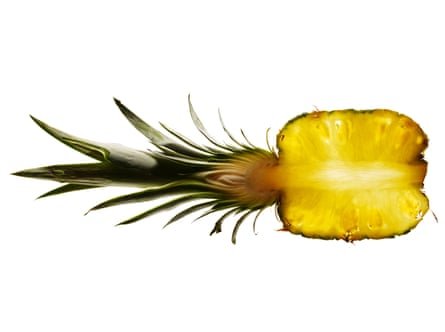
In the King’s College study, pineapple skin and core was found to contain 454% more fibre than the flesh. “Eating just the skin and core from a pineapple could provide as much fibre as eating five portions of the flesh alone,” say the researchers. While not many people will want to chew on tough, spiky pineapple skin, Gill suggests blending the bland core into smoothies. Or try making tepache, a fermented Mexican drink made from the skin and trimmings.
Q is for quick pickles
Heywood does a lot of pickling to avoid waste and preserve a taste of summer during the colder months. “In January and February, it’s really good to fall back on your pickles,” he says. He has pickled everything from fresh coriander seeds to leek flower buds: “They’re like leek capers or tiny pickled onions.” His basic pickling liquid is 200ml vinegar, 200ml water, 100g sugar and 2g salt.
R is for roasting
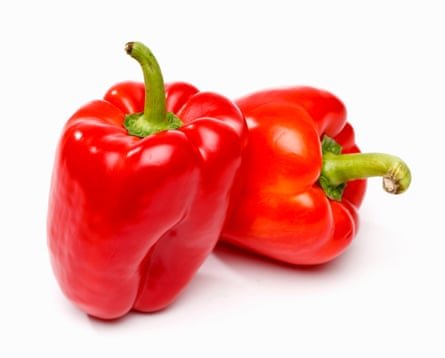
“Stalks can be roasted to bring out their natural sweetness,” says Handling. Don’t worry if you really don’t enjoy them, though – the study found broccoli stalks contain 28% less fibre than the florets. Fennel, too, contains 11% less fibre in the core and outer layers than the inner layers. With curly kale, there is a little more fibre – 6-7% – in the stalks than the leaves. However, it’s well worth roasting a pepper without deseeding it – the study found 234% more fibre in the stalks, seeds and placenta (which the seeds are attached to) than in the flesh.
S is for squash skin and seeds
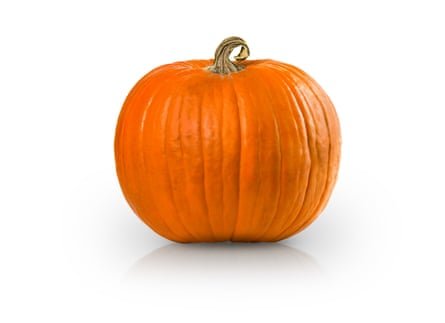
Handling loves to cook pumpkins and other squash. “You can use the flesh, roast the skin until it’s beautifully crisp, and take the seeds and turn them into something completely different, such as miso,” he says. That will give you a big fibre boost over eating the flesh alone: “Butternut squash skin and seeds contained 9.25g per 100g – nearly as much fibre as a bowl of Bran Flakes,” said the King’s College researchers. Try braising pieces of thick-skinned squashes in stock for 10 minutes to soften them before roasting. If you don’t feel up to fermenting them into miso, the seeds can simply be mixed with salt, smoked paprika and olive oil, and roasted until crispy.
T is for tea
Heywood likes to dry fruit skins and use them like tea leaves. He mixes and matches flavours, such as a tea of dried pear skins with foraged herbs, or apple skin and nettle. Oddbox has recipes for orange peel and pineapple peel teas, and even suggests making avocado pit tea.
U is for umami
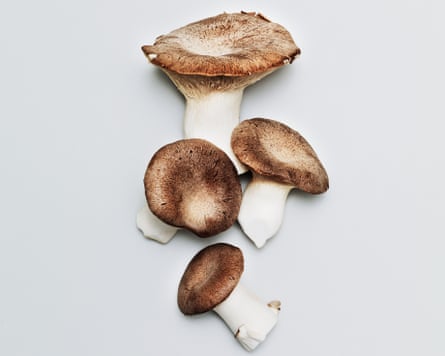
In her book Happy Snacking, Don’t Die!, the American forager Alexis Nikole Nelson simmers maitake mushrooms to make stock, then dries them out on the oven’s lowest setting and blitzes them into “umami powder”. This could be done with any mushroom offcuts – drying concentrates the glutamates and guanylates, which gives mushrooms their intense savoury taste.
V is for value for money
Researchers found that the root-to-tip components made up 25-48% of the total weight of the produce they analysed – so by using only the conventional parts, you could be chucking almost half of what you buy. “Stop and think before you throw something away,” says Handling. “Ask yourself: ‘Have I absolutely exhausted all possibilities with this ingredient?’ You don’t need to make things complicated. Start by keeping your vegetable trimmings and use them to make a stock” – which also saves money on shop-bought stocks and soups. The higher-fibre parts are also more filling, so food containing them will go further.
W is for watermelon rind
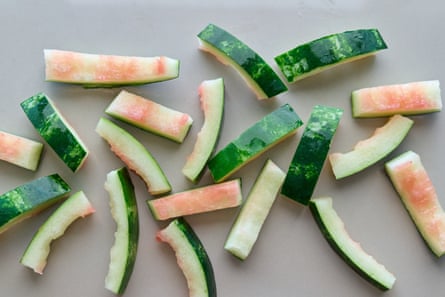
Watermelon is another fruit with far more fibre (426%) in the rind than the flesh, containing “2.10g of fibre per 100g – roughly equivalent to the fibre in a slice of wholemeal bread”, said researchers. The outer green part is more of an acquired taste, but the inner white rind can be pickled, used like cucumber in a gazpacho or sliced and stir-fried like courgette. The seeds can be roasted.
X is for oxalic acid
“Although cases are rare, consuming large quantities of rhubarb leaves can cause adverse symptoms, including abdominal cramping, nausea, vomiting and a burning sensation in the throat,” says Gill. “This is due to their high oxalic acid (oxalate) content. High levels of oxalates can be problematic in people predisposed to kidney stones.” With rhubarb, then, it is better to stick to eating the stalks.
Y is for yams
In North America, especially, sweet potatoes may be labelled “yams”. But while the skin of a sweet potato is thin and nutritious, the skin of a true yam is coarse, thick and bark-like. Yams should be peeled before cooking and eating.
Z is for zero waste
In the UK, according to the study, “approximately10m tonnes of food is wasted annually, with fresh fruits and vegetables representing 36% of this”. Cooking root-to-tip could therefore make a real contribution to shrinking our food-waste mountain. Heywood even has a “wastage” course on his set menu, using up the leftovers from his other dishes. In Handling’s case: “If we’ve saved as much of a vegetable as we can, and there’s still some scraps left, we feed them to our chickens.” For the rest of us, there’s always the compost bin.
Explore more on these topicsReuse this content
