
World Trace Mineral Nutrient Blends – Market Analysis, Forecast, Size, Trends and Insights
Ends in–
$4,000$4,000
-50% promotion · automatically applied at checkout
License:
Limited to one named user
What you get
- Full report in PDF · Excel data package · Word document · Executive presentation
- Email delivery 24/7, including weekends and holidays
- Copy-and-paste enabled · print-ready format
- Unlimited clarification rounds after delivery
Trace Mineral Nutrient Blends Market Forecast to 2035: Demand Accelerates on Precision Livestock and Crop Nutrition
Abstract
According to the latest IndexBox report on the global Trace Mineral Nutrient Blends market, the market enters 2026 with broader demand fundamentals, more disciplined procurement behavior, and a more regionally diversified supply architecture.
The global Trace Mineral Nutrient Blends market is entering a phase of structural expansion, with demand projected to grow at a compound annual growth rate of 5–7% from 2026 to 2035. These pre-formulated mixtures of essential micronutrients—zinc, copper, manganese, selenium, iodine, and others—are critical for optimizing biological performance across animal feed, crop fertilizers, and dietary supplements. The market is being reshaped by three converging forces: the industrialization of livestock production in emerging economies, the shift toward precision fertilization in row-crop agriculture, and the rising adoption of chelated and organic mineral forms that offer superior bioavailability.
Asia-Pacific currently accounts for the largest share of consumption, supported by China’s massive feed industry and India’s expanding poultry sector, while North America and Europe remain important markets for specialty and organic-certified blends. Supply is concentrated among a limited number of large-scale blenders and integrated chemical companies, creating a supplier landscape where qualification, consistency, and traceability are key competitive differentiators. As regulatory frameworks tighten around mineral limits and environmental impact, formulators are investing in reduced-copper and reduced-zinc blends, as well as biodegradable chelating agents.
The forecast to 2035 points to sustained volume growth, with value growth outpacing volume as premium and custom-blended products gain share.
The baseline scenario for the Trace Mineral Nutrient Blends market assumes no major supply-chain disruptions and a continuation of current regulatory trends. Under this scenario, global demand expands at a 5–7% CAGR from 2026 to 2035, with the market index reaching approximately 175 (2025=100) by 2035. Growth is underpinned by the steady intensification of animal agriculture, particularly poultry and aquaculture, where trace mineral blends are essential for feed efficiency, immune function, and product quality. In crop nutrition, the adoption of precision agriculture and soil-health management is driving demand for customized micronutrient blends that address specific deficiencies.
The dietary supplement segment, while smaller, is growing faster than average as consumers seek mineral support for immunity, thyroid function, and metabolic health. Regionally, Asia-Pacific remains the largest and fastest-growing market, followed by North America and Europe. Latin America and the Middle East & Africa offer emerging opportunities, though infrastructure and affordability constraints temper growth. On the supply side, capacity additions are expected in China, India, and Southeast Asia, but the market remains moderately concentrated.
Prices are forecast to remain volatile due to raw material cost fluctuations, but value growth is supported by the shift toward chelated and specialty blends. The baseline outlook does not assume breakthrough substitutions or radical regulatory shifts; it reflects a market in transition toward higher-value, more precise formulations.
Demand Drivers and Constraints
Primary Demand Drivers
- Rising global demand for animal protein, particularly poultry and aquaculture, drives feed premix consumption
- Precision agriculture and soil micronutrient management increase the use of custom-blended crop fertilizers
- Shift from inorganic to chelated and organic trace minerals improves bioavailability and reduces environmental excretion
- Growth in dietary supplement consumption for immune and metabolic health supports mineral blend demand
- Regulatory pressure to reduce copper and zinc levels in feed encourages adoption of highly bioavailable blends
- Expansion of pet food and aquaculture sectors in emerging markets creates new demand streams
Potential Growth Constraints
- Volatility in raw material prices for zinc, copper, and manganese salts pressures formulator margins
- Stringent regulatory limits on mineral content in feed and fertilizer vary by region and complicate global product portfolios
- High qualification costs and long validation times for new suppliers in regulated markets limit rapid sourcing shifts
- Consumer skepticism and labeling requirements for synthetic additives in organic and non-GMO segments
- Competition from single-element mineral supplements and vitamin-only premixes in price-sensitive markets
Demand Structure by End-Use Industry
Livestock and Poultry Feed (estimated share: 45%)
Livestock and poultry feed represents the largest end-use sector for trace mineral nutrient blends, accounting for an estimated 45% of global consumption. The segment is driven by the industrialization of meat production, particularly in Asia-Pacific and Latin America, where poultry and swine operations are scaling up. Trace mineral blends are essential for animal health, feed conversion efficiency, and product quality—zinc and manganese support skeletal development, copper and selenium bolster immune function, and iodine regulates metabolism. Through 2035, demand will shift from simple inorganic blends to chelated and organic forms that offer higher bioavailability and lower excretion, aligning with environmental regulations.
The segment’s growth is closely tied to feed production volumes, which are projected to rise in line with meat consumption. Key demand indicators include poultry and swine inventory, feed conversion ratios, and regulatory limits on mineral inclusion rates. Major feed producers and integrators are increasingly demanding custom blends tailored to specific species, age groups, and production goals, creating opportunities for specialty blenders. Current trend: Steady growth, premiumization.
Major trends: Shift from inorganic to chelated trace minerals for better bioavailability, Regulatory pressure to reduce copper and zinc levels in feed, Rising demand for species-specific and phase-specific premixes, Integration of trace mineral blends with other feed additives for precision nutrition, and Growth in antibiotic-free production systems increasing reliance on trace minerals for immune support.
Representative participants: Cargill, Archer Daniels Midland (ADM), Nutreco, Alltech, Zinpro Corporation, and Kemin Industries.
Crop Fertilizers (estimated share: 25%)
Crop fertilizers account for an estimated 25% of trace mineral nutrient blend consumption, a share that is expanding as farmers adopt precision agriculture and soil-health management practices. Trace mineral blends for crops are formulated to correct deficiencies in zinc, boron, manganese, copper, and iron, which are critical for enzyme activation, photosynthesis, and nutrient uptake. The segment is driven by the need to increase crop yields on limited arable land, as well as by government initiatives promoting balanced fertilization. Through 2035, demand will be supported by the growing use of custom-blended micronutrient packages that combine multiple minerals with macronutrients.
Key demand indicators include soil testing rates, fertilizer application intensity, and crop acreage for high-value fruits and vegetables. The shift toward sustainable agriculture and organic farming is also creating demand for chelated and natural mineral blends. However, adoption in developing regions remains constrained by cost and awareness, limiting the pace of growth in some markets. Current trend: Accelerating adoption.
Major trends: Rising adoption of soil testing and precision fertilization, Government initiatives promoting balanced micronutrient use, Growth in high-value crop production requiring tailored blends, Increasing use of chelated minerals for high-pH soils, and Expansion of organic farming creating demand for natural mineral
Representative participants: Yara International, The Mosaic Company, Nutrien, ICL Group, Compass Minerals, and K+S Aktiengesellschaft.
Aquaculture and Pet Food (estimated share: 15%)
Aquaculture and pet food together represent an estimated 15% of trace mineral nutrient blend demand, but this is the fastest-growing end-use sector, with annual growth rates exceeding the market average. In aquaculture, trace mineral blends are essential for fish and shrimp health, growth, and feed efficiency, particularly as production intensifies and disease pressures rise. The segment benefits from the rapid expansion of aquaculture output, especially in Asia-Pacific, and the increasing use of formulated feeds. In pet food, premiumization and humanization trends are driving demand for blends that support joint health, skin and coat condition, and immune function.
Through 2035, growth will be supported by rising pet ownership in emerging markets and the shift toward specialized pet diets. Key demand indicators include aquaculture feed production, pet food sales, and the prevalence of specific health conditions in pets. Formulators are focusing on palatability, stability, and bioavailability to meet the unique needs of these segments. Current trend: Fastest growing.
Major trends: Rapid expansion of aquaculture production in Asia-Pacific, Premiumization of pet food with functional mineral blends, Increasing demand for organic and natural trace mineralp, and Rising pet ownership in emerging markets driving volume growth
Representative participants: Skretting (Nutreco), BioMar, Alltech, Cargill, Mars Petcare, and Nestlé Purina.
Dietary Supplements (estimated share: 10%)
Dietary supplements account for an estimated 10% of trace mineral nutrient blend consumption, a segment characterized by steady growth and a strong focus on premium, science-backed formulations. Trace mineral blends in supplements are designed to support immune function, thyroid health, metabolic balance, and bone density. The segment is driven by rising consumer awareness of micronutrient deficiencies and the growing popularity of personalized nutrition. Through 2035, demand will be supported by an aging population, increasing health expenditure, and the expansion of e-commerce channels for supplements. Key demand indicators include supplement sales, consumer surveys on mineral intake, and regulatory approvals for health claims.
The segment is also seeing a shift toward chelated and plant-based mineral forms, as well as blends tailored for specific demographics such as women, athletes, and seniors. However, growth is tempered by regulatory scrutiny and competition from single-mineral supplements. Current trend: Moderate growth, premiumization.
Major trends: Rising consumer awareness of micronutrient deficiencies, Growth in personalized nutrition and targeted supplements, Shift toward chelated and plant-based mineral forms, Expansion of e-commerce and direct-to-consumer channels, and Increasing regulatory scrutiny of health claims.
Representative participants: DSM-Firmenich, Balchem Corporation, Glanbia, Herbalife Nutrition, Nature’s Bounty, and Amway.
Industrial and Other Applications (estimated share: 5%)
Industrial and other applications account for an estimated 5% of trace mineral nutrient blend consumption, encompassing uses in industrial fermentation, specialty chemicals, and research. This segment is niche but growing, driven by the need for precise mineral formulations in bioprocessing and the development of new applications in areas such as biofortified foods and animal-free proteins. Through 2035, demand will be supported by advances in biotechnology and the scaling of precision fermentation, which requires trace minerals as micronutrients for microbial growth. Key demand indicators include biotech R&D spending, fermentation capacity, and regulatory approvals for novel applications.
The segment is characterized by high specification requirements and long qualification cycles, favoring suppliers with strong technical support and quality assurance. While small in volume, this segment often commands premium prices and offers opportunities for differentiation. Current trend: Niche growth.
Major trends: Growth in precision fermentation and bioprocessing, Development of biofortified foods and novel proteinxpansion of research applications in life sciences, and Regulatory approvals for new industrial uses
Representative participants: DSM-Firmenich, BASF, Evonik Industries, Merck KGaA, Thermo Fisher Scientific, and Sigma-Aldrich.
Key Market Participants
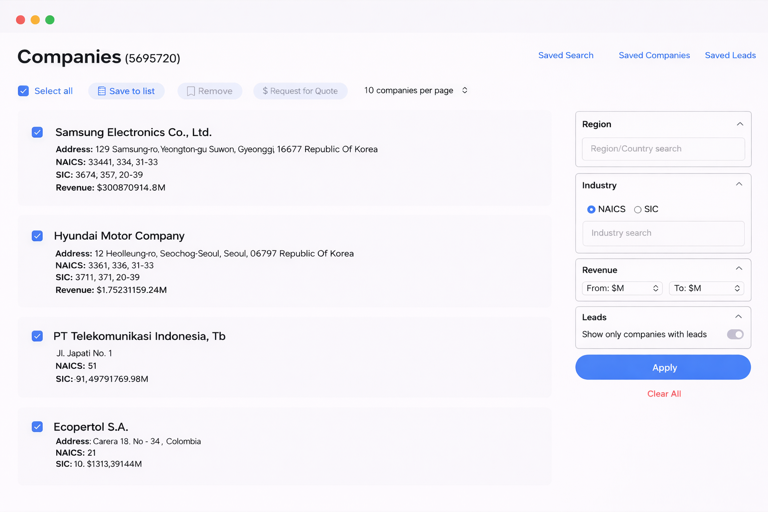
Interactive table based on the Store Companies dataset for this report.
| # | Company | Headquarters | Focus | Scale | Note |
|---|---|---|---|---|---|
| 1 | BASF SE | Ludwigshafen, Germany | Animal nutrition trace mineral premixes | Global | Leading chemical producer with extensive mineral blend portfolio |
| 2 | Cargill, Incorporated | Minneapolis, USA | Custom trace mineral blends for feed | Global | Major agribusiness with integrated nutrition solutions |
| 3 | Archer Daniels Midland Company | Chicago, USA | Mineral premixes and chelated minerals | Global | Large-scale processor and distributor of feed additives |
| 4 | Nutreco N.V. | Amersfoort, Netherlands | Specialized trace mineral blends for livestock | Global | Parent of Trouw Nutrition, strong R&D in mineral nutrition |
| 5 | Alltech Inc. | Nicholasville, USA | Organic trace mineral blends (Bioplex, Sel-Plex) | Global | Pioneer in chelated mineral technology |
| 6 | Kemin Industries, Inc. | Des Moines, USA | Mineral bioavailability enhancers and blends | Global | Focus on gut health and mineral absorption |
| 7 | Novus International, Inc. | St. Charles, USA | Chelated trace minerals (Mintrex) | Global | Subsidiary of Mitsui & Co., specialty animal nutrition |
| 8 | Zinpro Corporation | Eden Prairie, USA | Performance trace minerals (Availa, ProPath) | Global | Industry leader in zinc, copper, manganese amino acid complexes |
| 9 | Phibro Animal Health Corporation | Teaneck, USA | Mineral premixes and feed additives | Global | Diversified animal health and nutrition company |
| 10 | DSM-Firmenich AG | Kaiseraugst, Switzerland | Vitamin-mineral premixes and trace element solutions | Global | Merger of DSM and Firmenich, strong in premix business |
| 11 | Balchem Corporation | New Hampton, USA | Encapsulated trace minerals for feed | Global | Specializes in microencapsulation technology |
| 12 | Lallemand Animal Nutrition | Montreal, Canada | Mineral-yeast blends and probiotics | Global | Part of Lallemand Inc., focus on fermentation-derived minerals |
| 13 | Trouw Nutrition (Nutreco) | Amersfoort, Netherlands | Custom trace mineral premixes | Global | Nutreco subsidiary, leading premix manufacturer |
| 14 | Pancosma SA | Geneva, Switzerland | Palatability-enhanced mineral blends | Global | Part of ADM, known for flavor and mineral synergy |
| 15 | Biorigin (Zilor) | Lençóis Paulista, Brazil | Organic trace minerals from yeast | Regional | Brazilian biotech, uses sugarcane fermentation |
| 16 | QualiTech, Inc. | Chaska, USA | Mineral blends for feed and food | Regional | Family-owned, specializes in chelated minerals |
| 17 | Animine | Sillingy, France | Specialized trace mineral blends (CoRouge, HiZox) | Global | Focus on high-bioavailability zinc and copper oxides |
| 18 | Pestell Minerals & Ingredients | New Hamburg, Canada | Trace mineral premixes and distribution | Regional | Canadian distributor and blender for feed industry |
| 19 | JH Biotech, Inc. | Ventura, USA | Chelated mineral blends for agriculture | Regional | Also serves plant nutrition with trace minerals |
| 20 | Mosaic Company | Tampa, USA | Micronutrient blends for crop nutrition | Global | Major phosphate producer, offers trace mineral fertilizers |
| 21 | Yara International ASA | Oslo, Norway | Micronutrient-enriched fertilizer blends | Global | Leading crop nutrition company with trace element products |
| 22 | The Mosaic Company (Crop Nutrition) | Tampa, USA | Trace mineral blends for soil and foliar | Global | Separate division for micronutrient fertilizers |
| 23 | Haifa Group | Haifa, Israel | Specialty fertilizers with trace minerals | Global | Known for controlled-release micronutrient blends |
| 24 | ICL Group Ltd | Tel Aviv, Israel | Trace mineral fertilizers and feed additives | Global | Produces potassium-based mineral blends |
| 25 | SQM S.A. | Santiago, Chile | Lithium and specialty plant nutrition with trace minerals | Global | Major producer of potassium nitrate and micronutrient blends |
| 26 | Nouryon (formerly AkzoNobel Specialty Chemicals) | Amsterdam, Netherlands | Chelating agents for trace mineral blends | Global | Supplies EDTA and DTPA for mineral stabilization |
| 27 | Tata Chemicals Limited | Mumbai, India | Micronutrient blends for agriculture | Global | Indian conglomerate with trace mineral fertilizer products |
| 28 | Coromandel International Limited | Hyderabad, India | Micronutrient mixtures for crops | Regional | Leading Indian agri-input company with trace mineral blends |
| 29 | Growmark, Inc. | Bloomington, USA | Custom trace mineral blends for feed and crop | Regional | North American cooperative with blending facilities |
| 30 | Wilbur-Ellis Company | Spokane, USA | Trace mineral blends for agriculture and feed | Regional | Family-owned distributor and blender |
Regional Dynamics
Asia-Pacific (estimated share: 40%)
Asia-Pacific dominates the Trace Mineral Nutrient Blends market, driven by China’s massive feed industry, India’s expanding poultry sector, and Southeast Asia’s aquaculture growth. Demand is shifting toward chelated and custom blends, supported by government initiatives for food security and sustainable agriculture. Direction: Growing.
North America (estimated share: 22%)
North America remains a mature but innovative market, with demand driven by precision livestock farming, pet food premiumization, and dietary supplements. Regulatory pressure to reduce mineral excretion is accelerating the shift to highly bioavailable chelated blends, while sustainability mandates shape product development. Direction: Stable growth.
Europe (estimated share: 20%)
Europe’s market is shaped by stringent environmental regulations, particularly limits on copper and zinc in feed, which drive demand for chelated and organic trace minerals. The region also sees strong demand for organic-certified blends in crop nutrition and supplements, though growth is tempered by market maturity. Direction: Moderate growth.
Latin America (estimated share: 10%)
Latin America is a growing market, supported by Brazil’s large poultry and swine industries and expanding crop production. Demand is shifting from basic inorganic blends to more efficient chelated forms, though price sensitivity remains a constraint in some segments. Aquaculture is an emerging opportunity. Direction: Accelerating.
Middle East & Africa (estimated share: 8%)
The Middle East & Africa region offers significant untapped potential, with demand driven by livestock intensification, particularly in South Africa and the Gulf states. Infrastructure and affordability challenges limit growth, but investments in feed production and aquaculture are creating new opportunities for trace mineral blend suppliers. Direction: Emerging.
Market Outlook (2026-2035)
In the baseline scenario, IndexBox estimates a 6.0% compound annual growth rate for the global trace mineral nutrient blends market over 2026-2035, bringing the market index to roughly 175 by 2035 (2025=100).
Note: indexed curves are used to compare medium-term scenario trajectories when full absolute volumes are not publicly disclosed.
For full methodological details and benchmark tables, see the latest IndexBox Trace Mineral Nutrient Blends market report.
This report provides an in-depth analysis of the Trace Mineral Nutrient Blends market in the world, covering market size, growth trajectory, demand structure, supply capability, trade flows, pricing, competitive landscape, and forecast to 2035.
The study is designed for manufacturers, distributors, importers, exporters, investors, procurement teams, advisors, and strategy teams that need a consistent, data-driven view of market dynamics and a transparent analytical definition of the product scope.
Product Coverage
This report covers the market for trace mineral nutrient blends, which are pre-formulated mixtures of essential micronutrients such as zinc, copper, manganese, selenium, and iodine, used to fortify animal feed, fertilizers, and dietary supplements. The analysis encompasses products designed for agricultural, veterinary, and industrial applications, focusing on blends that deliver precise mineral ratios for optimal biological performance.
Included
- TRACE MINERAL PREMIXES FOR LIVESTOCK AND POULTRY FEED
- CUSTOM-BLENDED MICRONUTRIENT FORMULATIONS FOR CROP FERTILIZERS
- MINERAL NUTRIENT BLENDS FOR AQUACULTURE AND PET FOOD
- CHELATED AND INORGANIC TRACE MINERAL COMBINATIONS
- BULK AND PACKAGED TRACE MINERAL NUTRIENT BLENDS FOR INDUSTRIAL USE
- SPECIALTY BLENDS FOR ORGANIC AND NON-GMO APPLICATIONS
Excluded
- SINGLE-ELEMENT MINERAL SUPPLEMENTS (E.G., PURE ZINC OXIDE)
- VITAMIN-ONLY PREMIXES WITHOUT TRACE MINERALS
- PHARMACEUTICAL-GRADE INJECTABLE MINERAL SOLUTIONS
- RAW MINERAL ORES OR UNPROCESSED ROCK MATERIALS
- FINISHED ANIMAL FEED OR COMPLETE FEED RATIONS
Report Coverage and Analytical Modules
The report combines the standard market-statistics backbone with strategic chapters that are useful for commercial planning, sourcing decisions, market entry, competitor monitoring, and portfolio prioritization.
- Market size, historical development, and forecast to 2035
- Demand architecture by application, customer group, and buyer behavior
- Supply structure, production role where applicable, sourcing, and value-chain constraints
- Exports, imports, trade balance, import dependence, and key trade corridors
- Price levels, price corridors, specification effects, and commercial pricing logic
- Competitive landscape, company presence, product portfolio focus, and strategic positioning
- Country profiles for world and regional reports, with production role stated only where relevant
Segmentation Framework
The market is segmented into decision-relevant buckets so that demand drivers, pricing logic, supply constraints, and competitive positions can be compared across the same analytical frame.
- By product type / configuration: Trace Mineral Nutrient Blends, Components and modules, Integrated systems, Consumables and replacement parts
- By application / end-use: Industrial automation and instrumentation, Electronics and optical systems, Semiconductor and precision manufacturing, OEM integration and maintenance
- By value chain position: Upstream inputs and critical components, Manufacturing, assembly and quality control, Distribution, integration and channel partners, After-sales service, replacement and lifecycle support
Classification Coverage
The classification coverage includes products categorized under animal feed additives, fertilizer micronutrient mixtures, and dietary supplement intermediates. The report segments the market by product type (trace mineral nutrient blends, components and modules, integrated systems, consumables and replacement parts), by application (industrial automation and instrumentation, electronics and optical systems, semiconductor and precision manufacturing, OEM integration and maintenance), and by value chain (upstream inputs and critical components, manufacturing, assembly and quality control, distribution, integration and channel partners, after-sales service, replacement and lifecycle support).
Geographic Coverage
Coverage includes global totals, major demand markets, production and sourcing hubs, leading exporters and importers, and country profiles for the top national markets.
Data Coverage
- Historical data: 2012-2025
- Forecast data: 2026-2035
- Market indicators: value, volume, consumption, production where available, exports, imports, prices, and company landscape
Units of Measure
- Volume: tonnes
- Value: USD
- Prices: USD per tonne
Methodology
The report combines official statistics, trade records, company disclosures, product-level evidence, and analyst validation. Data are standardized, reconciled, and cross-checked to keep market sizing, trade flows, pricing, and forecasts comparable across countries and time periods.
- International trade data, including exports, imports, and mirror statistics
- National production, consumption, and industry statistics where available
- Company-level information from public filings, product portfolios, and disclosed operating footprints
- Price series, unit-value benchmarks, and specification-level price signals
- Analyst review, outlier checks, triangulation, and forecast-scenario validation
All indicators are mapped to a consistent product definition and reviewed against the segmentation framework used in the Table of Contents.
1. INTRODUCTION
Report Scope and Analytical Framing
- Report Description
- Research Methodology and the Analytical Framework
- Data-Driven Decisions for Your Business
- Glossary and Product-Specific Terms
2. EXECUTIVE SUMMARY
Concise View of Market Direction
- Key Findings
- Market Trends
- Strategic Implications
- Key Risks and Watchpoints
3. MARKET SIZE AND DEVELOPMENT PATH
Market Size, Growth and Scenario Framing
- Market Size: Historical Data (2012-2025) and Forecast (2026-2035)
- Growth Outlook and Market Development Path to 2035
- Growth Driver Decomposition
- Scenario Framework and Sensitivities
4. CATEGORY SCOPE, DEFINITIONS AND BOUNDARIES
Commercial and Technical Scope
- What Is Included and How the Market Is Defined
- Market Inclusion Criteria
- Product / Category Definition
- Exclusions and Boundaries
- Distinction From Adjacent Products and Substitute Categories
5. CATEGORY STRUCTURE, SEGMENTATION AND PRODUCT MATRIX
How the Market Splits Into Decision-Relevant Buckets
- By Product Type / Configuration
- By Application / End Use
- By Customer / Buyer Type
- By Channel / Business Model / Technology Platform
- Segment Attractiveness Matrix
- Product Matrix and Segment Growth Logic
6. DEMAND, CUSTOMER AND CONSUMER ARCHITECTURE
Where Demand Comes From and How It Behaves
- Consumption / Demand by Country or Region: Historical Data (2012-2025) and Forecast (2026-2035)
- Demand by End-Use and Buyer Group
- Demand by Customer / Consumer Segment
- Purchase Criteria, Switching Logic and Adoption Barriers
- Replacement, Replenishment and Installed-Base Dynamics
- Future Demand Outlook
7. PRODUCTION, SUPPLY AND VALUE CHAIN
Supply Footprint, Trade and Value Capture
- Production by Country
- Manufacturing Footprint and Supply Hubs
- Capacity, Bottlenecks and Supply Risks
- Value Chain Logic and Margin Pools
- Route-to-Market and Distribution Structure
8. TRADE, SOURCING AND IMPORT DEPENDENCE
Trade Flows and External Dependence
- Exports by Country
- Imports by Country
- Trade Balance and Sourcing Structure
- Import Dependence and Supply Resilience
- Strategic Trade Corridors
9. PRICING, PROMOTION AND COMMERCIAL MODEL
Price Formation and Revenue Logic
- Price Levels and Price Corridors
- Pricing by Segment / Specification / Geography
- Cost Drivers and Margin Logic
- Promotion, Discounting and Procurement Patterns
- Revenue Quality and Commercial Levers
10. COMPETITIVE LANDSCAPE AND PORTFOLIO POWER
- Market Structure and Concentration
- Competitive Archetypes
- Segment-by-Segment Competitive Intensity
- Portfolio Breadth and Product Positioning
- Capability Matrix
- Strategic Moves, Partnerships and Expansion Signals
11. GEOGRAPHIC LANDSCAPE AND COUNTRY ROLES
Where Growth and Supply Concentrate
- Core Demand Markets
- Core Production Markets
- Export Hubs
- Import-Reliant Markets
- Fastest-Growing Markets
- Country Archetypes and Strategic Roles
12. GROWTH PLAYBOOK AND MARKET ENTRY
Commercial Entry and Scaling Priorities
- Where to Play
- How to Win
- Build vs Buy vs Partner
- Route-to-Market Choices
- Localization and Capability Thresholds
- Entry Risks and Mitigation
13. WHERE TO PLAY NEXT: MOST ATTRACTIVE GROWTH OPPORTUNITIES
Where the Best Expansion Logic Sits
- Most Attractive Product Niches
- Most Attractive Customer Segments
- Most Attractive Markets for Commercial Expansion
- White Spaces and Unsaturated Opportunities
- High-Margin and Underpenetrated Pockets
- Most Promising Product Adjacencies
14. PROFILES OF MAJOR COMPANIES
Leading Players and Strategic Archetypes
- Leading Manufacturers and Suppliers
- Regional Specialists and Challengers
- Production Footprint and Manufacturing Capacities
- Product Portfolio and Segment Focus
- Pricing Positioning and Indicative Price Logic
- Channel / Distribution Strength
- Strategic Archetypes
15. COUNTRY PROFILES
Detailed View of the Most Important National Markets
View detailed country profiles50 countries
16. METHODOLOGY, SOURCES AND DISCLAIMER
- Modeling Logic
- Source Register
- Publications, Regulatory and Industry References
- Analytical Notes
- Disclaimer
BASF SE
Headquarters
Ludwigshafen, Germany
Focus
Animal nutrition trace mineral premixes
Scale
Global
Leading chemical producer with extensive mineral blend portfolio
Cargill, Incorporated
Headquarters
Minneapolis, USA
Focus
Custom trace mineral blends for feed
Scale
Global
Major agribusiness with integrated nutrition solutions
Archer Daniels Midland Company
Headquarters
Chicago, USA
Focus
Mineral premixes and chelated minerals
Scale
Global
Large-scale processor and distributor of feed additives
Nutreco N.V.
Headquarters
Amersfoort, Netherlands
Focus
Specialized trace mineral blends for livestock
Scale
Global
Parent of Trouw Nutrition, strong R&D in mineral nutrition
Alltech Inc.
Headquarters
Nicholasville, USA
Focus
Organic trace mineral blends (Bioplex, Sel-Plex)
Scale
Global
Pioneer in chelated mineral technology
Kemin Industries, Inc.
Headquarters
Des Moines, USA
Focus
Mineral bioavailability enhancers and blends
Scale
Global
Focus on gut health and mineral absorption
Novus International, Inc.
Headquarters
St. Charles, USA
Focus
Chelated trace minerals (Mintrex)
Scale
Global
Subsidiary of Mitsui & Co., specialty animal nutrition
Zinpro Corporation
Headquarters
Eden Prairie, USA
Focus
Performance trace minerals (Availa, ProPath)
Scale
Global
Industry leader in zinc, copper, manganese amino acid complexes
Phibro Animal Health Corporation
Headquarters
Teaneck, USA
Focus
Mineral premixes and feed additives
Scale
Global
Diversified animal health and nutrition company
DSM-Firmenich AG
Headquarters
Kaiseraugst, Switzerland
Focus
Vitamin-mineral premixes and trace element solutions
Scale
Global
Merger of DSM and Firmenich, strong in premix business
Balchem Corporation
Headquarters
New Hampton, USA
Focus
Encapsulated trace minerals for feed
Scale
Global
Specializes in microencapsulation technology
Lallemand Animal Nutrition
Headquarters
Montreal, Canada
Focus
Mineral-yeast blends and probiotics
Scale
Global
Part of Lallemand Inc., focus on fermentation-derived minerals
Trouw Nutrition (Nutreco)
Headquarters
Amersfoort, Netherlands
Focus
Custom trace mineral premixes
Scale
Global
Nutreco subsidiary, leading premix manufacturer
Pancosma SA
Headquarters
Geneva, Switzerland
Focus
Palatability-enhanced mineral blends
Scale
Global
Part of ADM, known for flavor and mineral synergy
Biorigin (Zilor)
Headquarters
Lençóis Paulista, Brazil
Focus
Organic trace minerals from yeast
Scale
Regional
Brazilian biotech, uses sugarcane fermentation
QualiTech, Inc.
Headquarters
Chaska, USA
Focus
Mineral blends for feed and food
Scale
Regional
Family-owned, specializes in chelated minerals
Animine
Headquarters
Sillingy, France
Focus
Specialized trace mineral blends (CoRouge, HiZox)
Scale
Global
Focus on high-bioavailability zinc and copper oxides
Pestell Minerals & Ingredients
Headquarters
New Hamburg, Canada
Focus
Trace mineral premixes and distribution
Scale
Regional
Canadian distributor and blender for feed industry
JH Biotech, Inc.
Headquarters
Ventura, USA
Focus
Chelated mineral blends for agriculture
Scale
Regional
Also serves plant nutrition with trace minerals
Mosaic Company
Headquarters
Tampa, USA
Focus
Micronutrient blends for crop nutrition
Scale
Global
Major phosphate producer, offers trace mineral fertilizers
Yara International ASA
Headquarters
Oslo, Norway
Focus
Micronutrient-enriched fertilizer blends
Scale
Global
Leading crop nutrition company with trace element products
The Mosaic Company (Crop Nutrition)
Headquarters
Tampa, USA
Focus
Trace mineral blends for soil and foliar
Scale
Global
Separate division for micronutrient fertilizers
Haifa Group
Headquarters
Haifa, Israel
Focus
Specialty fertilizers with trace minerals
Scale
Global
Known for controlled-release micronutrient blends
ICL Group Ltd
Headquarters
Tel Aviv, Israel
Focus
Trace mineral fertilizers and feed additives
Scale
Global
Produces potassium-based mineral blends
SQM S.A.
Headquarters
Santiago, Chile
Focus
Lithium and specialty plant nutrition with trace minerals
Scale
Global
Major producer of potassium nitrate and micronutrient blends
Nouryon (formerly AkzoNobel Specialty Chemicals)
Headquarters
Amsterdam, Netherlands
Focus
Chelating agents for trace mineral blends
Scale
Global
Supplies EDTA and DTPA for mineral stabilization
Tata Chemicals Limited
Headquarters
Mumbai, India
Focus
Micronutrient blends for agriculture
Scale
Global
Indian conglomerate with trace mineral fertilizer products
Coromandel International Limited
Headquarters
Hyderabad, India
Focus
Micronutrient mixtures for crops
Scale
Regional
Leading Indian agri-input company with trace mineral blends
Growmark, Inc.
Headquarters
Bloomington, USA
Focus
Custom trace mineral blends for feed and crop
Scale
Regional
North American cooperative with blending facilities
Wilbur-Ellis Company
Headquarters
Spokane, USA
Focus
Trace mineral blends for agriculture and feed
Scale
Regional
Family-owned distributor and blender
Recommended posts
Free Data: Trace Mineral Nutrient Blends – World
Instant access. No credit card needed.