

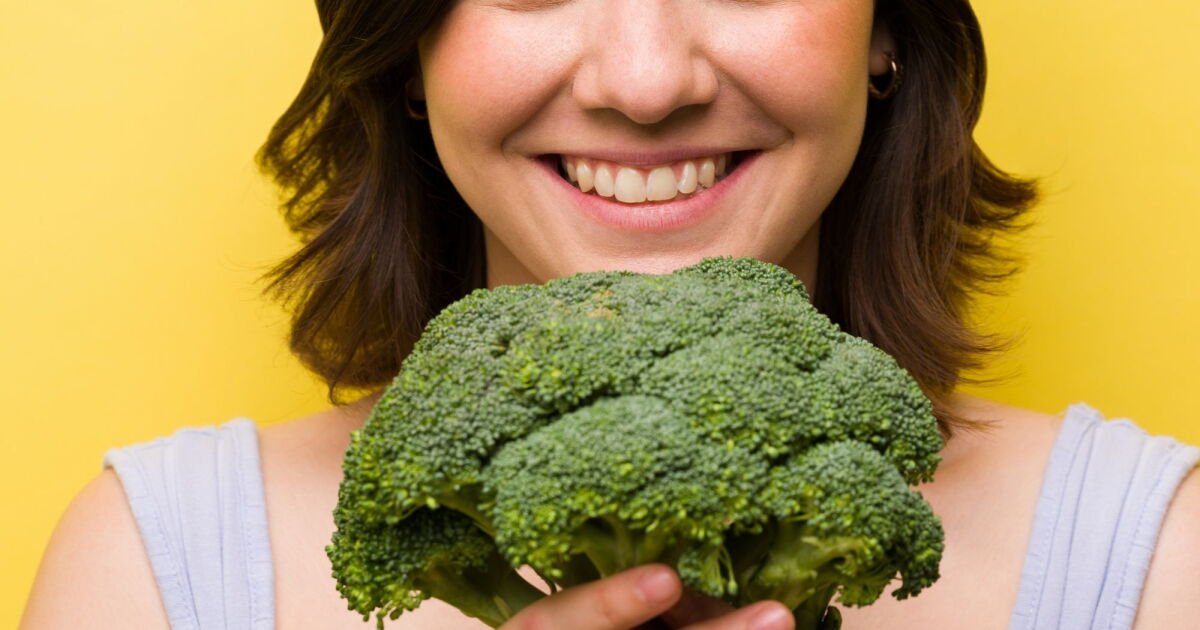
A new study has found that eating more legumes was associated with better cardiometabolic health in young men, while cruciferous vegetables such as broccoli and cauliflower were the prime choice of vegetable for young women.
Researchers from Edith Cowan University (ECU) analyzed data from 638 participants in Western Australia’s long-running Raine Study, all aged around 22. They compared consumption of five vegetable groups with a cluster of early warning signs for cardiovascular disease and type 2 diabetes, including blood pressure, waist circumference, blood glucose, triglycerides and HDL cholesterol.
“The findings are really interesting, but we’d be cautious about interpreting them as evidence of a genuine difference based on the observational study design,” senior study author, Associate Professor Therese O’Sullivan, told New Atlas. “Our sample size is relatively modest. So we would describe it as hypothesis-generating rather than definitive evidence.”
The researchers divided vegetables into five groups: legumes; cruciferous vegetables; green leafy vegetables; alliums such as onions and garlic; and yellow-orange-red vegetables including tomatoes, peppers, carrots and pumpkin.
Participants were classed as having higher cardiometabolic risk if at least two of their health measures crossed established thresholds used to diagnose metabolic syndrome. That’s lower than the usual metabolic syndrome definition, which requires at least three risk factors, because too few of these young participants met the criterion for useful analysis.
Even so, the number was striking. Of the 638 participants, 120 – around 19% – already had at least two cardiometabolic risk factors.
“We didn’t use the ‘standard’ metabolic syndrome definition for this study, which is three risk factors or above,” said O’Sullivan. “Thankfully, not enough participants were in this category! So we went with the two-plus option.
“But it is still striking that a substantial proportion of otherwise well young adults already had combinations of high BP, lipids [and so forth]. It reinforces the idea that cardiometabolic risk is not something that just starts or appears in middle or older age. These processes are evident earlier in life.”
After adjusting for potential influences, including income, education, physical activity, smoking, alcohol intake, saturated fat, total energy intake, and consumption of other vegetables, one vegetable group remained significantly associated with lower cardiometabolic risk in each sex.
For men, every additional 75-gram daily serving of legumes was associated with 72.2% lower odds of belonging to the higher-risk group.
For women, an additional 75-gram daily serving of cruciferous vegetables was associated with 84.9% lower odds. Seventy-five grams equates to a half-cup of cooked legumes or cooked cruciferous veggies.
Those numbers look enormous. They also need some careful unpacking. The study did not find that adding a serving of beans to a man’s diet will cut his future cardiovascular risk by 72%, or that eating broccoli will slash a woman’s risk by 85%.
“The paper reports odds ratios rather than reporting on a reduction in an individual’s future disease risk,” O’Sullivan said. “The high-risk category was defined as having at least two risk factors.
“These are modelled associations rather than estimates of an effect of a dietary intervention, and it’s important to note that the confidence intervals are wide, which tells us there is likely to be some imprecision in the odds ratio.”
For legumes in men, the adjusted odds ratio was 0.278. For cruciferous vegetables in women, it was 0.151. So the interesting finding is the association and its direction, rather than the eye-popping percentage figures themselves.
“The key message was that in our cohort, higher consumption of those vege groups was associated with lower odds of a higher-risk metabolic profile,” said O’Sullivan. “It doesn’t predict future health risk, though.”
One possible explanation lies in the different, biologically active compounds found in legumes and cruciferous vegetables, and how they might interact with sex hormones.
Legumes are rich in dietary fiber as well as flavonoids and saponins. Fiber can help regulate blood glucose and lipids, while flavonoids and saponins have antioxidant effects that may reduce oxidative stress. Cruciferous vegetables like broccoli, cauliflower, cabbage and Brussels sprouts contain glucosinolates and other sulfur-containing compounds that have been investigated for effects on insulin sensitivity, inflammation, lipid metabolism and oxidative stress.
The researchers suggest that these compounds might be metabolized differently by men and women, perhaps partly because of sex hormones. The research proposes that flavonoids and saponins in legumes may have greater effects involving testosterone, while compounds in cruciferous vegetables could interact more strongly with estrogen and progesterone pathways. For now, though, that’s a hypothesis.
“We think the paper’s proposed mechanism is plausible, but direct evidence is lacking regarding links between sex hormones [and] different responses to specific veges and cardiometabolic outcomes,” O’Sullivan said.
The gut microbiome could also be involved.
“Gut microbiome would be worth investigating too, as it contributes to what biologically active compounds we get from the food we eat, and this could potentially differ with sex or hormonal status,” she said.
The study itself notes that both legumes and cruciferous vegetables have previously been linked with changes to the gut microbiome, although exactly how individual vegetable groups contribute to those changes remains unclear.
There’s another substantial caveat: this was a cross-sectional study. Diet and cardiometabolic health were assessed at roughly the same point in time, meaning researchers can’t determine whether eating particular vegetables produced the healthier metabolic profile.
The reverse could also be true. People with healthier lifestyles might simply be more likely to eat certain vegetables.
“Although we adjusted for many important factors … there are other factors that could have contributed to the results,” O’Sullivan said. “People who eat more veges may also be more likely to sleep well, get regular health checks, etc. Genetics is also likely to have a role.”
Regardless of whether the beans-for-men and broccoli-for-women distinction survives further research, another finding deserves attention: cardiometabolic risk factors were already clustering in a substantial proportion of people barely into their 20s.
High blood pressure, abnormal blood lipids, abdominal fat and impaired glucose regulation don’t suddenly materialize in middle age. The processes that ultimately contribute to cardiovascular disease and type 2 diabetes can be underway much earlier.
“Young adulthood is an important opportunity to establish and maintain healthy lifestyle behaviors – disease prevention is a lifelong process,” said O’Sullivan. “Our findings also suggest it is important for young people to be proactive about their health and include regular health checks.”
The next step is to determine whether the vegetable associations persist over time and, ideally, whether deliberately increasing particular vegetables actually changes cardiometabolic markers.
The researchers say randomized dietary trials would help answer that question. The current study itself calls for longitudinal research to determine whether the associations seen at age 22 persist into later adulthood.
For now, the findings raise an intriguing possibility. When it comes to the health benefits of vegetables, it may eventually turn out that what you eat is only part of the story. Who’s eating it might matter, too.
The study was published in the journal Nutrition, Metabolism and Cardiovascular Diseases.
