


BBC/ Stephen Parker
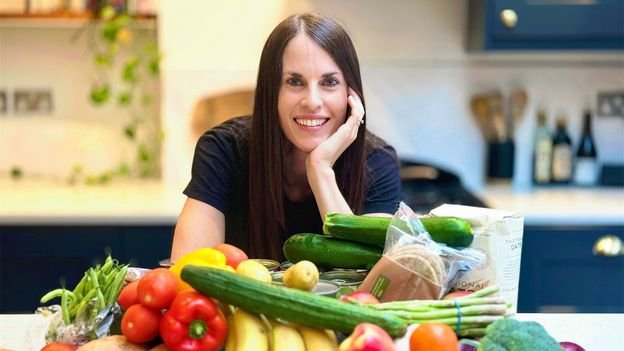
In the end, I overshot my target and ate a grand total of 51 plants.
Over the last two years, a new health goal has been growing in popularity. First there was 10,000 steps, then five a day. Now we’re being encouraged to eat 30 plants per week.
The trend is based on a 2018 study. It found that people who reported eating at least 30 plants per week tended to have more biodiverse gut microbiomes compared to those who ate fewer than ten. <a href="https://www.cambridge.org/core/journals/british-journal-of-nutrition/article/does-a-diverse-wholefood-plantbased-dietary-intervention-improve-gut-microbiome-composition-gut-symptoms-energy-and-hunger-in-healthy-adults-a-randomised-controlled-trial/6590821C018637A26737CE52D55500F1″ rel=”nofollow noopener” target=”_blank”>Subsequent studies have found that changing your diet to incorporate this much flora each week can improve your microbiome.
This has many well-known benefits such as reducing inflammation and helping us to live healthier, longer lives.
However, when my editor suggested I give the 30-plants trend a go, it initially sounded extremely intimidating and perhaps impossible. I imagined preparing complicated salads for every meal and struggling with the vast quantities of fibre I’d be consuming. But one week on from my experiment, I can report that it was remarkably easy. So easy, in fact, that I accidentally overshot my goal and ended up eating 51 plants in total. Here’s how.
More plants, more microbes
First up, you don’t necessarily need 30 as your goal.
Rob Knight, director of the Center for Microbiome Innovation, at the University of California, San Diego, led the research which began the 30-plant trend. He says the number 30 is somewhat arbitrary, especially as there weren’t many participants who ate over 30 plants per week in his study. Those who eat 25 or even 20 may also experience similar health benefits, he says.
Those who started with a low number of different plants saw the biggest effect. “If you’re already eating a moderate number of plants, the effect is not going to be as large by adding more.”
What counts?
As it has grown in popularity, the goal of eating 30 plants has been gamified. Each additional plant earns you a “plant point“.
There are six main categories of food we can include, which are:
• Legumes (beans and pulses)
Tea, coffee and chocolate count too. All contain compounds, such as antioxidants, which can benefit our health.
The fact that spices are included surprised me. Research shows that adding a mix of spices to everyday meals can result in measurable improvements in gut microbes in as little as 48 hours, explains Federica Amati, a nutrition scientist at Imperial College, London.
Some a quarter of a point each
Small changes can quickly affect our “microbe ecosystem” says Amati, but to make this meaningful, we need continued plant diversity.
The benefits of focusing on a diverse diet is that it pushes us past simply choosing the obvious, like apples, cucumbers and peppers, says Amati. Research has foundthat low consumption of whole grains, nuts and seeds is a leading risk factor for an early death.
Of course, hitting such a large range of different food items can be expensive if you buy lots of fresh produce, but for my experiment I used a mixture of fresh ingredients, cupboard staples as well as frozen food.
BBC/ Melissa Hogenboom
My week of 30+
Each day of my experiment, I ate my usual bowl of overnight oats with chia seeds and yoghurt every morning for breakfast. This week I varied the fruits I added each day.
For lunch I rarely have much time, so I ate a sandwich or had leftovers from the night before, which also helped avoid waste.
I did put more thought into my evening meals than my usual on-the-day planning, because I was trying not to repeat the same ingredients. I picked recipes not too far from my routine but aimed for those that had plenty of plant-based ingredients.
My grocery shop looked slightly more colourful than usual, but it wasn’t more expensive.
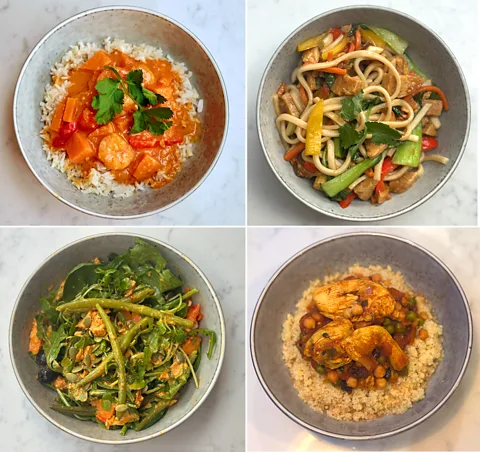
Monday: For dinner I had a chickpea tagine, which was delicious and quick to make. I followed this chickpea tagine recipe from BBC Good Food and added peas for an extra boost of fibre.
Plants today:Oats, blueberries, chia seeds, cabbage, peas, chickpeas, couscous, tomatoes, onions, raisins. Also today: Several spices (which I’m listing as one item).
Tuesday: Selena Wu, a dietician at King’s College London, says that it helps to focus on what extra fibre you can add to a meal. That could involve adding some nuts or seeds into your breakfast cereal or eating a side salad with your sandwich, which is what I did at lunch today.
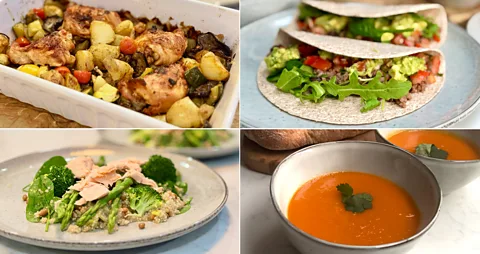
For dinner I made a quinoa salad with green lentils, asparagus and grilled salmon.
Plants today: Raspberries, satsuma, apple, quinoa, broccoli, spinach, asparagus, lemon, garlic, spring onions.
Wednesday: A simple curry is another staple in my household, but I tried a new recipe this time, adding sweet potatoes and red peppers, served with green beans on the side. The whole family enjoyed this one and it contained plenty of spices.
Plants today:Coffee, banana, cashew nuts, coconut milk, sweet potato, green beans, red peppers, brown rice.
Thursday:By Thursday I’ve already hit close to 30 so the pressure is off but I’m still adding as much variation as I can and sticking to my meal plan.
Today I chose something easy that I could put together quickly using vegetables and cupboard staples. I made a vegetable soup with onions, garlic carrots, lentils and sweet potatoes and served it with a slice of sourdough bread and a simple side salad.
I also made a delicious healthy frozen banana milkshake, to which I added cocoa powder and cashew nuts.
Plants today:Tea, cocoa powder, cashew nuts, pumpkin seeds, red lentils, rocket salad.
BBC/ Melissa Hogenboom
Friday: As the week went on, keeping up with the variety became more challenging, as I can’t count the same item twice, but I still aimed to add plenty of fresh produce even if it meant repeating items. It’s also hard to keep track of quite how many spices and herbs I’ve eaten.
Friday was taco day, a popular dish in our house, which I made with black beans and beef mince. Luckily my “ready to eat” avocados were finally ripe, so I made a large portion of guacamole as well as a salsa.
Plants today:Wholemeal wheat wraps, cucumber, black beans, avocado, fresh coriander.
Saturday: Our Saturdays are always busy so I wanted a very quick simple meal I could throw together. I made a simple noodle stir fry using tempeh, which is made from fermented cooked soya beans, but any protein would suit. My kids didn’t like this one (and I’m not convinced I cooked the tempeh to perfection as it was a little bitter) so I made a simple pasta at the same time.
Plants today: Dried mango, peanuts, tempeh, olives, pak choi, baby corn, sesame seeds.
Sunday: By Sunday my enthusiasm for cooking so many new meals had started to fade. I let my oven do the hard work and made a chicken and vegetable tray bake with a side salad.
I managed to last the week without a top-up shop and I raided my fridge to introduce something new. I still had aubergines, courgettes and potatoes and defrosted some chicken thighs.
Plants today: Carrots, aubergine, courgettes, potatoes.
Lasting change
In the end, my plant tally for the week came to about 51. The main challenge was the planning, as well as the difficulty of cooking new recipes after a busy day. But those problems will disappear once I’ve repeated these recipes again a few times.
I also had a lot more leftovers than usual, which served as healthy lunches for the next day. I snacked less and didn’t eat out, which is where the real saving came in. My children, often quite fussy, tried more than they usually would too.
The biggest surprise is that in the end, I was over-prepared. I could almost have hit 30 plant points by just cooking my usual meals. Once you add in coffee, tea, chocolate, spices, and wholegrains, it’s remarkable how quickly you get to 30 plants if you already have a healthy diet.
But one thing I will keep doing is pushing myself to vary the ingredients I buy each week. And keeping an eye out for opportunities to throw an extra plant in any meal. At the very least, my cupboard is now full of nuts and seeds that I will continue to sprinkle onto everything.
melissa_hogenboom on Instagram.
For trusted insights on health and wellbeing, sign up to the Live Well For Longer and Six Steps to Calm courses.
For more science, technology, environment and health stories from the BBC, follow us on Facebook and Instagram.
Health
Food
Nutrition
Science
Features
