

Expert SpeakHealth Express
Published on Oct 09, 2026
Emerging evidence links ultra-processed food consumption with adverse mental-health outcomes, highlighting the importance of addressing food environments and dietary quality as part of a broader public-health approach to mental wellbeing
Mental health is increasingly recognised as a major component of population health, yet its relationship with food environments remains comparatively underexplored. In 2023, an estimated 1.2 billion people were living with a mental disorder, with anxiety and depressive disorders being the most common conditions. The latest World Health Organization (WHO) estimates indicate that mental disorders accounted for 157 million disability-adjusted life years (DALYs) in 2021, equivalent to 5.2 percent of global DALYs; depressive and anxiety disorders alone contributed 56.7 million and 42.8 million, respectively. At the same time, dietary exposure to ultra-processed foods (UPFs) has expanded substantially across many populations. This convergence is drawing growing scientific attention to the relationship between highly processed diets and mental health.
UPFs are products formulated largely from food-derived substances and additives, often designed for convenience, palatability, affordability and extended shelf life.
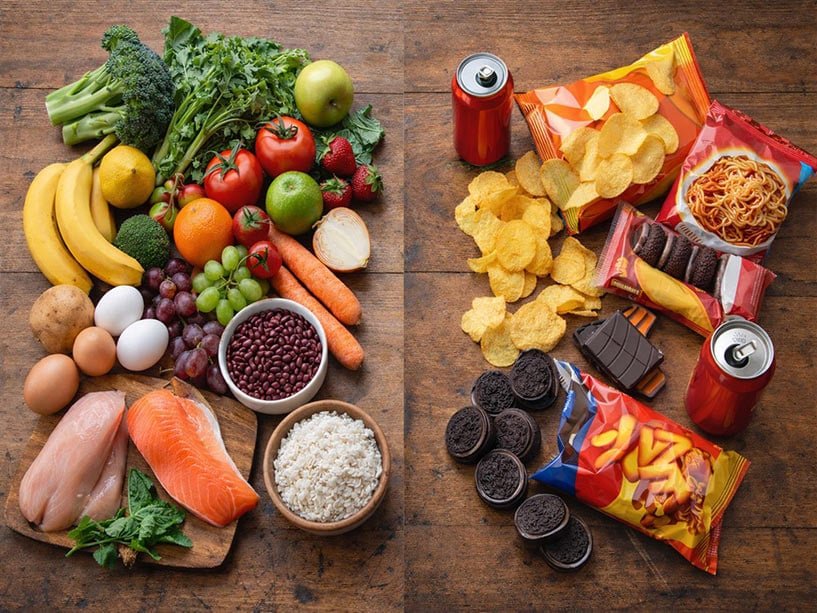
UPFs are products formulated largely from food-derived substances and additives, often designed for convenience, palatability, affordability and extended shelf life.They include packaged snacks, confectionery, sugar-sweetened beverages, instant noodles, many ready-to-eat meals and processed meat products. Under the <a href="https://www.cambridge.org/core/journals/public-health-nutrition/article/ultraprocessed-foods-what-they-are-and-how-to-identify-them/E6D744D714B1FF09D5BCA3E74D53A185″ rel=”nofollow noopener” target=”_blank”>NOVA classification, their defining characteristic is the nature and purpose of industrial processing rather than simply their nutrient composition. This distinction matters because UPFs constitute a heterogeneous category, and the nutritional and health implications of individual products can differ greatly.
A Changing Global Food Environment
The expansion of UPFs is increasingly evident across different regions and stages of nutrition transition. A systematic review of 99 studies involving 1.38 million participants found considerable international variation in UPF consumption. The United States and the United Kingdom recorded some of the highest dietary contributions, generally exceeding 50 percent of total energy intake in several population groups, while estimates in countries such as Italy were much lower. A broader synthesis of global sales and consumption trends has also documented a substantial expansion in the volume and variety of UPFs available worldwide, although the pace and extent of this transition vary considerably across countries and regions. The evidence base remains geographically uneven. A 2024 systematic review restricted to nationally representative samples identified 55 studies covering 32 countries, but also found wide variation in UPF intake by country, urbanisation, income and food insecurity, underscoring the need for more representative evidence across diverse food-system contexts.
This gap is increasingly important as packaged and convenience foods become more accessible in countries undergoing rapid urbanisation and dietary transition. The changing food environment is not simply altering the nutrient composition of diets; it is also changing how food is purchased, prepared and consumed. Time constraints, food prices, marketing, convenience and increasing availability of packaged products can collectively shift diets away from traditional dietary patterns towards greater reliance on commercially formulated foods.
Emerging Evidence on Mental Health
The evidence linking UPFs with mental health is no longer limited to small observational studies. A 2022 systematic review and meta-analysis covering 17 observational studies and approximately 385,500 participants found that greater UPF consumption was associated with higher odds of depressive symptoms, anxiety symptoms and common mental-disorder symptoms. A dose-response meta-analysis involving 26 studies and 260,385 participants from 12 countries also reported an association between greater UPF consumption and depression, although the evidence for anxiety was less consistent.
The evidence linking UPFs with mental health is no longer limited to small observational studies.
In a population-based cohort of 183,474 participants followed for an average of 13.1 years, 5,453 participants developed depression and 6,763 developed anxiety. Those in the highest quartile of UPF consumption had a higher risk of incident depression than those in the lowest quartile, with hazard ratios varying according to how UPF exposure was measured. A 2024 analysis of the NutriNet-Brasil cohort, involving 15,960 adults, similarly found that each 10-percentage-point increase in dietary energy from UPFs was associated with a 10% higher hazard of incident depressive symptoms.
The 2024 umbrella review of 45 pooled analyses involving almost 9.9 million participants found that greater UPF exposure was associated with prevalent anxiety, common mental disorders, incident depressive outcomes and adverse sleep outcomes. The authors classified the evidence for anxiety and common mental disorders as convincing according to their predefined evidence framework, and the evidence for depressive outcomes as highly suggestive. Several mechanisms may plausibly connect high UPF consumption with mental health. UPF-heavy diets can contain more refined carbohydrates, added sugars, saturated fats and sodium, while providing less fibre and dietary diversity. Such dietary patterns may contribute to metabolic dysfunction and chronic low-grade inflammation, pathways that have been implicated in depression and other mental disorders.
Implications for Food and Health policy
The emerging evidence expands the UPF debate beyond obesity and metabolic disease. Food environments are increasingly recognised as important determinants of dietary behaviour and health, with food availability, affordability, accessibility and marketing shaping dietary choices. This does not imply that all processed foods carry equivalent risks, nor does the current evidence justify attributing mental disorders to UPF consumption alone. It does, however, strengthen the case for policies that improve access to healthy, nutritious foods while addressing food environments and marketing practices that promote foods high in free sugars, saturated fats and sodium.
Food environments are increasingly recognised as important determinants of dietary behaviour and health.
Large prospective datasets from Europe and other high-income settings have generated much of the current evidence, while comparable longitudinal evidence remains scarce across South Asia, Africa and parts of Latin America. This is particularly significant for countries experiencing rapid nutrition transition, where traditional dietary patterns coexist with expanding markets for packaged foods. A study of 1,030 adolescents aged 12-16 years from private and government schools in Delhi found that UPFs contributed an average of 16.2 percent of total energy intake, demonstrating a notable level of exposure among Indian adolescents.
Recentevidence among adolescents has revealed UPF consumption alongside psychological and sleep outcomes.For India, stronger longitudinal evidence is needed to examine the relationship between dietary processing, food affordability, dietary quality and mental-health outcomes across different age and socioeconomic groups. Such research would help determine whether associations observed predominantly in European and other high-income populations are replicated within India’s distinct nutritional, cultural and food-system context.
For India, stronger longitudinal evidence is needed to examine the relationship between dietary processing, food affordability, dietary quality and mental-health outcomes across different age and socioeconomic groups.
The emerging UPF-mental health literature therefore adds an important dimension to the global food-policy debate. The evidence is sufficiently consistent to warrant greater scientific and policy attention, but the causal pathways remain incompletely understood. Moving beyond an obesity-centred understanding of UPFs towards a broader ‘food-health-mental health framework’ can help integrate dietary quality, food environments and mental wellbeing into public-health policy.
Shoba Suriis a Senior Fellow with ORF’s Health Initiative
Disclosure: The Author acknowledges use of Google Gemini for language edits.
The views expressed above belong to the author(s). ORF research and analyses now available on Telegram! Click here to access our curated content — blogs, longforms and interviews.


Author
Shoba Suri
Dr. Shoba Suri is a Senior Fellow with ORFs Health Initiative.
Shoba is a nutritionist with experience in community and clinical research. She has worked on nutrition, …
