

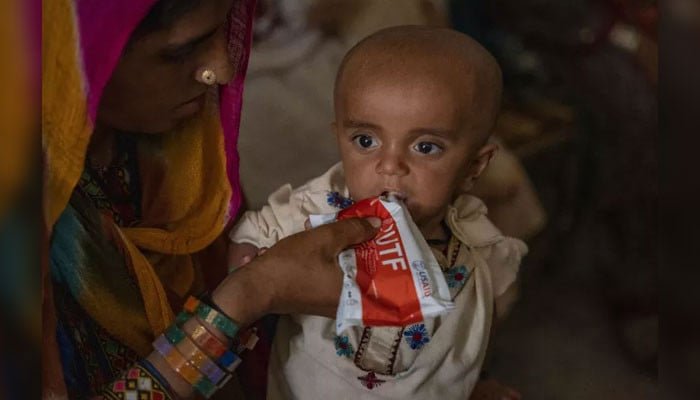
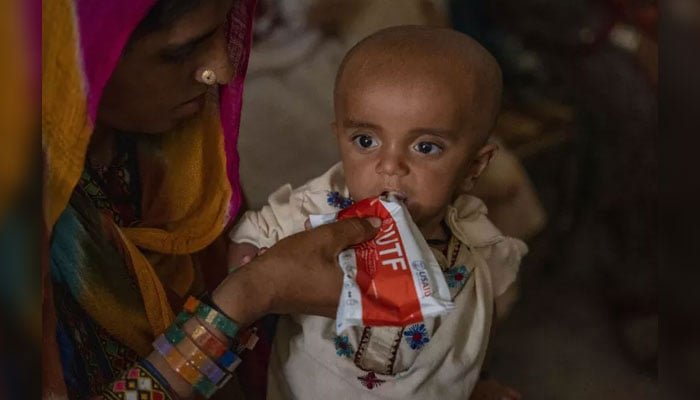
The UN has recently released its multiagency report on the State of Food Security and Nutrition in the World 2026.
The good news is that at the global level, there is a gradual, sustained improvement in hunger. An estimated 7.8 per cent of the global population faced hunger in 2025, down from 8.1 per cent in 2024 and 8.6 per cent in 2022. Asia and Latin America have shown steady progress in recent years, while the prolonged upward trend of hunger in Africa has halted.
The worrying news is that Pakistan has the highest unaffordability of a minimum healthy diet despite having the lowest cost of such a diet in South Asia. It is estimated that about 63 per cent of Pakistanis, or 161 million people, could not afford the cheapest mix of grain, pulses, milk, eggs, fruit, vegetables and other nutritious foods in 2025 after the Food and Agriculture Organisation’s standard allowance on housing, transport and utilities.
The 63 per cent figure for Pakistan still needs careful reading. It is a modelled national estimate. No household survey directly counted 161 million people. The FAO priced the food basket in 2021 and projected its 2025 cost through Pakistan’s food price index. That index may move differently from the foods in its basket. The FAO also applies a standard allowance for other essential spending. Actual housing, transport and energy costs vary greatly across Pakistan.
Location also changes the burden. Rural food insecurity remains higher, while the urban rate has risen rapidly as city households depend more heavily on purchased food alongside rent and utilities. Seasonal prices can also put fruit and vegetables beyond reach for several months. A single national estimate cannot identify where assistance or lower food prices would produce the largest gain. Despite these methodological flaws, the trend presented by UN agencies about Pakistan is broadly endorsed by HIES and the National Poverty Estimate Report.
Let us see how. Inflation in Pakistan has fallen from its 2023 peak, yet consumers still say food is unaffordable. They are hit by a double whammy. Their wages and incomes lost ground during the surge. Although inflation has declined since then, their purchasing power has not been restored. Lower inflation means that prices are still rising, albeit more slowly. As a result, consumers have to reduce their consumption to match their eroded purchasing power.
That 63 per cent cannot afford a minimum health diet can also be better understood in the context of Pakistan’s latest Household Integrated Economic Survey (HIES). Average monthly household income almost doubled from Rs41,545 in 2018-19 to Rs82,179 in 2024-25. During the same period, the official per-adult (not per-household) equivalent poverty line increased more than double, from Rs3,758 to Rs8,484 per month. After adjusting for prices, the recent Poverty Report estimates that real household income fell by nearly 13 per cent. Consequently, poverty increased from 21.9 to 28.9 per cent, adding about 25 million people to the number of poor.
The intake of healthy food is quite unequal among different income groups. Real consumption fell by almost 16 per cent among the poorest fifth quintile, declined in the next two groups, remained nearly flat in the second and rose by almost 7.0 per cent among the richest fifth. Even if cheaper relative to South Asian standards, the healthy food basket remains unaffordable when incomes are low and remains accessible to those already better off.
The reduced purchasing power is also visible through another indicator. The Pakistan Bureau of Statistics compared the quantities of 14 food items across the two HIES rounds. Consumption of thirteen food items declined. Monthly consumption per person fell by almost 19 per cent for rice, 26 per cent for pulses and 10 per cent for milk. Mutton, beef and chicken together fell by about 18 per cent.
Spending among the poorest is concentrated on wheat and cooking fat, leaving much less for milk, eggs, pulses, meat, fruit and vegetables. The poorest fifth of households spend almost half their budget on food. Wheat takes 20 per cent of their selected food spending, while fruit receives only 2.4 per cent. The richest fifth consume more than three times as much milk and about five times as many eggs compared to the poorest fifth.
This dietary divide leads to serious health problems. One in three children under five is stunted. Almost half of women of reproductive age are anaemic, and one in four adults is obese.
We often use the word ‘hunger’ in multiple contexts. However, the above-mentioned reports describe a food crisis that extends beyond hunger in Pakistan.
Technically speaking, undernourishment measures whether people receive enough calories over time. Food insecurity records the experience of struggling to obtain affordable food, and then to assimilate it in the human body. Pakistan’s poverty line is based on food and other essential needs. The FAO’s measure of diet affordability asks whether a person can buy a balanced diet (comprising major food groups) after allowing for other expenses. The term hunger will be interpreted differently depending on the parameter used.
The same household can appear in more than one category. A family may secure enough wheat and cooking oil to avoid chronic hunger while milk, eggs, fruit and vegetables remain beyond its budget, thus placing it among the group that is deprived of a healthy diet.
The large group living just above the poverty line is central to this picture. Despite officially being above the poverty line, any external or internal shock, such as an increase in energy prices or a family illness, negatively affects the quantity and quality of food that it consumes.
To ensure a healthy diet for everyone, Pakistan needs its own estimate of healthy diet affordability based on HIES. PBS, the Planning Commission and the FAO should apply Pakistani estimates of essential non-food expenses, and report provincial, rural, urban and seasonal results. This measure would show how many households can afford a varied diet and where the shortfall is greatest.
Pakistan has long judged food security through the wheat crop and flour prices. On top of that, the government should also add the affordability of pulses, milk, eggs, vegetables and fruit to its food security considerations.
To do the needful, the government has to ensure that a healthy diet remains affordable. Depressing farm prices would weaken production and offer no durable solution. However, increasing farmers’ profitability through higher yields, lower post-harvest losses, efficient transport and competitive markets can lead to a win-win situation where consumers will also benefit. Let us shift the focus from food security to ‘healthy-food-security’.
The writer heads SDPI, chairs the board of the National Disaster Risk Management Fund, and serves on the ADBI’s Advisory Board. He posts on LinkedIn @Abidsuleri

Nepra Approves Re0.75 Per Unit Power Tariff Hike Nationwide
PPP’s Bilawal Vows To Form Govt In AJK, Says 11 Seats Still Undecided
Oil Extends Gains And Stocks Mostly Down On Fresh Hormuz Worries
AJK Election Commission Revises Schedule For Third Phase Of Polls
Eight Dead, Including Teen Suspect’s Grandparents, In Thailand Shooting
Authorities Restore Eight-member Medical Board For Mir Raza Ali Exhumation
Security Forces Neutralise 10 India-backed Terrorists In KP Operations: ISPR
Pakistan-Saudi-Turkiye Defence Pact: Attack On One To Be Treated As Attack On All
Trump Signs Narrower Birthright Citizenship Orders After Supreme Court Setback







Petrol price falls by Rs2.20, diesel by Rs1.50 per litre
JI stages nationwide protests against inflation, soaring fuel prices
Erdogan says trilateral defence pact ‘targets no country’
Nepra approves Re0.75 per unit power tariff hike nationwide
