

“I’m Pi and this is Leo, and today we’re going to eat some raw roadkill.” So begins a YouTube video featuring two raw food enthusiasts eating the heart of a run-over raccoon.
Another of the duo’s YouTube videos is titled The Elite Know Raw Food is Safe & Healthy and Vilify it to Keep You a Weak Slave. That title neatly sums up the ethos of “dark nutrition”.
A New York Times Magazine article clarifies that dark nutrition is not a specific diet, but a style of thinking about food and health. “Its adherents [have] concluded that the usualutives, pharmaceutical corporations – [can] not be trusted,” the article explains
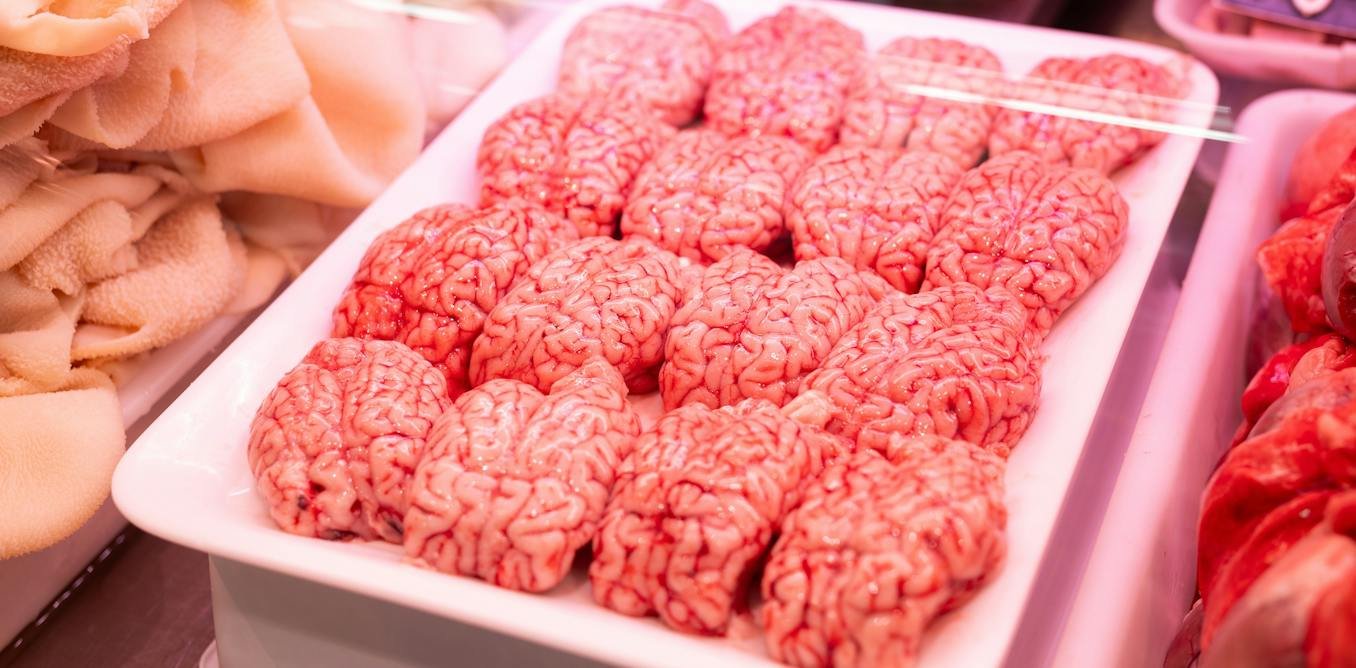
People who follow this style of eating tend to reject mainstream dietary advice in favour of unconventional eating practices. This can include avoiding seed oils, drinking unpasteurised milk, consuming lots of sugar, avoiding vegetables, taking unusually high doses of supplements and, yes, even eating raw roadkill.
Adrian Weston/Alamy
These food choices often stem from concerns about pesticides, toxins and pollutants in food. Or they can emerge when someone has an ailment their doctor can’t resolve. They take matters into their own hands and change the one thing they have complete control over: their diet.
Most people are satisfied with official nutritional guidance, but others seek more specific answers. As a result, those following dark nutrition self-experiment in an attempt to boost their health or treat a condition, regardless of whether there is scientific evidence to support their choices.
Some people get their nutrition information from the news, social media, and family and friends. But what is often covered in the headlines or on social media isn’t necessarily what is shown in the scientific studies.
The misleading information could be because journalists and influencers are not trained to understand the complex content of research papers, or because researchers are just really bad at explaining their findings. Even healthcare professionals and the government get it wrong occasionally. As a result, nutrition messages can become confused and confusing.
Confusing messages
A great example is the humble egg. In 1957, the British Egg Marketing Board launched the campaign: “Go to work on an egg”. Then, in 1968, the American Heart Association recommended that people at high risk of heart disease eat no more than three eggs a week.
The recommendation was based partly on animal experiments linking blood cholesterol to coronary heart disease. However, the relationship between eating eggs and developing heart disease turned out to be considerably more complicated than early nutritional advice suggested.
Margarine, red wine, coffee, coconut oil, red meat, potatoes and chocolate have had their own roller-coaster rides – one minute healthy, the next minute not.
A young science
This constant back-and-forth and changing messages can mean it is hard to know what constitutes a healthy diet. Unfortunately, nutrition science is messy, and it is a relatively young scientific discipline. Much of what we know has only been identified in the last century.
That means there are lots of questions that remain unanswered, and as we (nutritionists) search for the answers, we are likely to get things wrong. That is science.
Science is a process of questioning the world around us and searching for answers through research. The problem we have in nutrition research is that it is very hard to control someone’s diet and all the factors in their life that can affect health to provide definitive answers to the questions.
We mainly rely on people self-reporting the foods they eat and what illnesses or diseases they develop. This can tell us whether there is a link between diet and health, but not if diet prevents or causes illness and disease. So we have evidence that is seen as broad, conflicting and confusing.
Sadly, we now live in a post-truth era where scientific evidence is less important and influential than someone’s beliefs or opinions. The influencer culture – where people can share their own thoughts as fact, regardless of whether there is any foundation or evidence – has a big role to play in fuelling dark nutrition.
What is clear here is that the wider dangers of following dark nutrition are largely ignored. The potential for food poisoning, infection and disease by eating raw meat and organs, the risk of vitamin and mineral deficiencies by avoiding fruit and vegetables, and the chance of toxic levels of some vitamins and minerals with excessive supplement use.
It can be confusing to know what to eat. Government guidelines on food and nutrition remain the backbone of a healthy diet, and these will develop as new evidence emerges. Questioning conventional advice is reasonable, but alternative diets also need to be judged by the quality of the evidence.
