

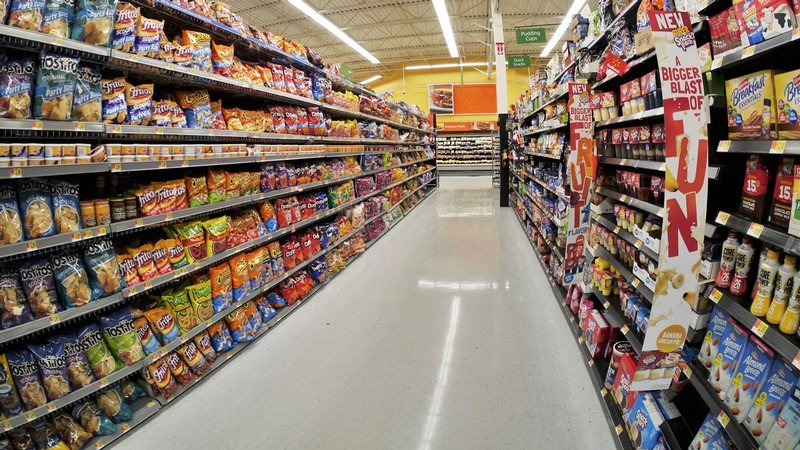
Ultra-processed foods now make up an estimated 73% of the U.S. food supply. This includes the hotdogs, ice cream and fries from our freezers and fast-food restaurants — as well as the strawberry-flavored yogurt you had for breakfast, the ham-on-whole-wheat you ate at lunch, and the pasta ragú for dinner.
Ultra-processed foods are ubiquitous, inexpensive, convenient, and inevitably good-tasting. They are formulated to be shelf-stable and widely appealing with refined ingredients, flavors, colors, emulsifiers, and other additives that aren’t used in home kitchens — plus extra sugar and fat. The average adult in the U.S. now gets 53% of their daily calories from ultra-processed foods, while children and teens consume even more.
Recent research from Oluyemisi Akinsola, working with Abiodun Atoloye in the Department of Nutrition, Dietetics and Food Science at Utah State University, found that ultra-processed foods make up a staggering 68% of teens’ total daily calorie intake. Akinsola is working to determine the connection between snacking habits and ultra-processed food intake for teens.
The relative health and safety of ultra-processed foods have been the subject of fierce national debate. It’s not necessarily an easy topic to digest, according to Lacie Peterson, clinical professor at USU and a registered dietician — partly because many of the food processes and additives are so new that research hasn’t yet fully determined their impact on human health. The consequences for such a shift away from traditional eating are only just emerging, Peterson said, and food experts at USU are working to understand how ultra-processed foods impact everything from food choices to long-term chronic disease, and they’re are finding ways to push the food system to a healthier standard.
Are Ultra-Processed Foods Really That Bad for You?
“It’s a fair question,” Peterson said. “Since these kinds of products are literally everywhere, it’s easy to wonder how bad they might actually be. The answer is — they aren’t ‘poison,’ but they really aren’t at all good for your health in any quantity.”
Many consequences for consuming UPFs occur in the long term, she said. People eating diets high in processed foods put on weight, miss out on key nutrients, have elevated cholesterol levels, and have increased chances of long-term heart disease and diabetes — but not necessarily immediately. You can’t necessarily point the finger at any one ingredient, she said. It’s a combination of the stress to your body from eating a cocktail of industrial products and missing out on the foods and nutrients you would otherwise be eating.
There are a few other factors that make ultra-processed foods especially problematic
Hyperpalatability. UPFs taste too good. They are packed with ingredients like hydrogenated oils, high-fructose corn syrup, artificial flavors, and chemical emulsifiers that may be “safe” to eat but trick the brain’s reward system so that it’s hard to stop when you are full (think of movie theater popcorn).
Bite-for-bite, there are typically also more calories in ultra-processed foods than in whole or minimally processed ingredients (things like frozen fruits, pre-chopped vegetables, or rolled oats), said Stephan Van Vliet, director for the Center for Human Nutrition Studies at USU. People consume 500 more calories per day when eating UPFs than eating whole foods, research from the National Institutes of Health shows. When Van Vliet and his team compared ultra-processed and minimally-processed diets, those eating ultra-processed foods were unhealthier — even when the total calorie count was the same. This suggests that the health issues related to diets rich in ultra-processed foods are not due to the calories alone.
Foods That are Pre-Digested. Processing breaks down the physical and chemical structure of natural foods so they become soft and stripped of fiber. When it’s so easy to chew and swallow, your gut doesn’t have time to signal to the brain that you’ve had enough, Peterson said.
Ultra-processed foods are typically high in saturated fat, sodium, and sugar, and low in water and fiber. You can consume a huge number of calories in a few bites without ever stretching your stomach enough to feel full, she said.
Missing Nutrition.Whole and minimally-processed foods like vegetables, fruits, grains, meat, milk, and eggs are a carnival of nutrients that bodies need, Van Vliet said. Even when UPFs are artificially fortified, they can’t mimic the broad array of natural phytonutrients, minerals and antioxidants found in whole foods. Processing adds back in a few things that people like to see on the label — protein and vitamin C for example — but does not give people the other thousands of compounds in foods, he said.
Recent research from Van Vliet evaluated official systems for food rating and found that they tend to oversimplify what is labeled “healthy” and potentially underestimate the metabolic risks of highly processed foods.
So What Should We Eat?
The question is not simply how to stop people from eating ultra-processed foods whose research focuses on food insecurity and community food systems. It’s how to make healthy foods easier to choose, more affordable, more appealing, and a normal part of everyday life
“We need to look beyond individual choices and improve the food environments where children, adolescents, and adults make food decisions. This includes at schools, in retail food environments, on social media, and in advertising,” she said.
“It’s easy enough to say to just eat more whole and minimally processed foods,” Peterson said. “But there are complex questions attached to that advice — who has access to good foods? Can everyone afford them? Do we know how to prepare them and store them? Can we retrain our palates to appreciate the taste of natural foods?”
One answer, Van Vliet thinks, is to
“People choose UPFs because they are engineered for flavor and palatability,” he said. “Some produce doesn’t have a lot of flavor when it’s grown strictly for high yield — it tastes bland.”
Van Vliet is researching the way regenerative farming practices can be used to produce foods with better flavor. (Think of a home-grown tomato versus one from the grocery store in winter). Without high levels of pesticides and synthetic fertilizers, plants get a little more stressed out but in a good way, he said, and produce more complex defense compounds that can translate to richer flavors and higher antioxidant levels.
Another area that needs more attention is food education, Atoloye said.
“Young people need opportunities to build the knowledge and skills that help them make healthy food choices on their own,” she said.
While some health effects of ultra-processed foods are well-established, other areas require ongoing research Future studies could focus on the cocktail effects of food additives on human health — the complex mixtures of synthetic additives we are exposed to interact within the body in ways we still need to understand, he said. Researchers are also working to establish exactly how strongly these cumulative exposures are linked to long-term diseases
For more information about UPFs and balanced eating, visit USU’s Create Better Health website, or re
WRITER
Lael Gilbert
Public Relations Specialist
S.J. and Jessie E. Quinney College of Agriculture & Natural Re
CONTACT
Lacie Peterson
Clinical Professor
Department of Nutrition, Dietetics & Food Sciences
435-797-4244
lacie.peterson@usu.edu
Research1161storiesHealth391storiesFood222storiesWellness216stories
SHARE
Comments and questions regarding this article may be directed to the contact person listed on this page.
