

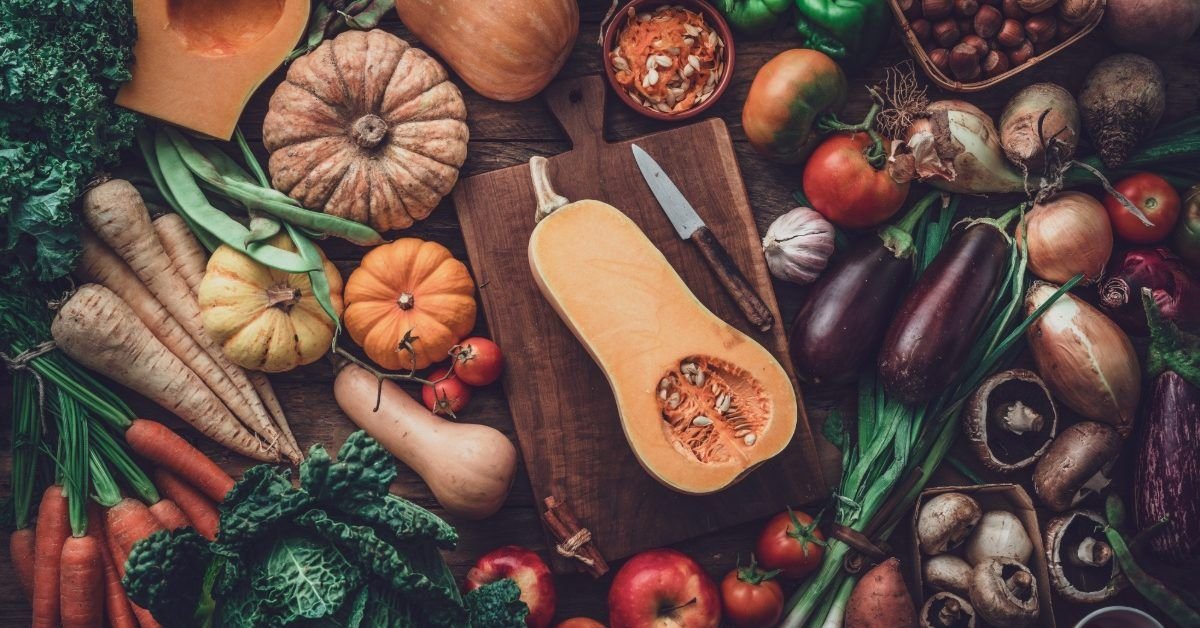
- Peels, skins, seeds, and stalks of many fruits and vegetables contain significantly more fiber than the parts typically eaten — in some cases up to five times more, according to a study analyzing 12 produce types.
- Fiber helps regulate blood sugar, supports beneficial gut bacteria, and may help lower LDL cholesterol, yet around 95% of adults in the United States don’t meet the recommended 25 to 30 grams daily.
- To try root-to-tip eating safely, start small by keeping skins on apples and kiwi, slicing broccoli stalks for stir-fries, or saving vegetable trimmings for homemade broth. Always wash produce thoroughly and research new plant parts before eating them.
Eating fruit and veggie scraps may boost fiber intake and cut food waste.
This study from King’s College London found that peels, skins, seeds, and stalks of fruits and vegetables—parts often discarded—contained significantly more dietary fiber than the commonly eaten portions in 10 of 12 produce types analyzed.
In some cases, the fiber content was up to five times higher in these “root-to-tip” components.
These findings, recently published in the International Journal of Food Sciences and Nutrition, are noteworthy, since around 95% of U.S. adults aren’t getting enough fiber. What’s more, around one-fifth of all food produced globally is wasted every year.
Discarded parts may contain up to 5 times more fiber
The researchers identified 12 fresh produce items that were deemed suitable for “root-to-tip” inclusion:
In the laboratory analysis, they measured the dietary fiber content of both the “root-to-tip” components (skins, peels, seeds, stalks) and the parts that people typically eat.
The key findings of the study showed that in 10 of the 12 produce types, the “root-to-tip” components contained more fiber than the parts typically consumed.
- Watermelon rind contained 2.10 grams of fiber per 100 grams compared with around in a typical serving.
- Butternut squash skins and seeds contained 9.25 grams of fiber per 100 grams compared with in the flesh.
- Pineapple skin and core contained five times more fiber (453.7%) than the flesh.
However, broccoli stalks contained 28.4% less fiber than the florets that people usually eat, meaning individuals are already consuming the most fiber-rich part.
Most participants in focus groups saw the nutritional value of the “root-to-tip” approach as more of a motivator than its sustainability.
However, these findings show that a “root-to-tip” approach to many fruits and vegetables could not only support higher dietary fiber intake but also reduce food waste.
Kristin Kirkpatrick, president of KAK, Consulting, LLC, and a dietitian at the Cleveland Clinic Department of Wellness & Preventive Medicine, said that the takeaway isn’t to eat every peel or seed, but to look for safe, simple ways to get more fiber from the foods you’re already buying. Kirkpatrick wasn’t involved in the study.
This applies to some of the plants analyzed in this study, but not all produce. For instance, you can only eat a kiwi that’s peeled. This is still a better choice than no kiwi (or a processed-food snack in its place) at all.
Why fiber matters for long-term health
Fiber is for promoting health and preventing chronic conditions such as cardiovascular disease, type 2 diabetes, colorectal cancer, and obesity.
“Fiber does much more than support regular bowel movements. It helps regulate blood sugar, supports beneficial gut bacteria, and certain types of soluble fiber can help lower LDL cholesterol by increasing bile acid elimination,” noted Michelle Routhenstein, a preventive cardiology dietitian at Entirely Nourished, who wasn’t involved in the study.
On average, adults are recommended to get 25–30 grams (or more, depending on age) of fiber daily.
Both nutrition experts told Healthline that people generally aren’t getting enough fiber because of their food options or choices.
“Most likely because individuals are not consuming enough plants, and overconsuming processed and ultra-processed foods which are typically very low in fiber,” said Kirkpatrick. “Simply not eating enough fruits and vegetables or choosing white refined grains over whole grains can be why a person’s diet is lacking fiber.”
Routhenstein added, “I think it is important that when we talk about fiber we point out that it doesn’t have to mean completely changing how you eat. I encourage people to incorporate fiber-rich ingredients into familiar, culturally meaningful foods they already enjoy.”
“Start with small increases with foods you enjoy and build gradually to allow your digestive system to adjust.”
How to safely try ‘root-to-tip’ eating at home
It is important to always research any new plant parts before eating them, wash thoroughly, and consult a healthcare professional if you have digestive conditions or concerns.
And remember that not all produce scraps are edible or recommended.
“Any dietary change will be dependent on personal preference. Some individuals may not enjoy or may not know how to add components of a plant they are not used to,” said Kirkpatrick.
She noted that, based on the study’s examples, an easier option might be to add more kiwi peels and seeds. “In fact, kiwi skin is probably the most practical fruit peel to highlight for consumers,” she said.
Routhenstein added, “I think there is a knowledge gap that the skins, peels, from the root to the tip are edible and nutritious, so we need to start there.”
She suggested that one way to start is by eating the skins of apples, pears, and well-scrubbed carrots. Trim and thinly slice broccoli stalks for stir-fries or soups. Sautée beet greens and stems just as you would spinach. Freeze appropriate vegetable trimmings, such as carrot ends and celery leaves, for homemade broth.
“Root-to-tip eating helps reduce food waste by encouraging us to use more of the edible portions of fruits and vegetables rather than discarding them. It also maximizes the nutritional and economic value of the food we purchase while making better use of the water, land, and energy required to produce it,” said Routhenstein.
“The key is finding simple, enjoyable ways to incorporate these parts into meals we already eat.”
