

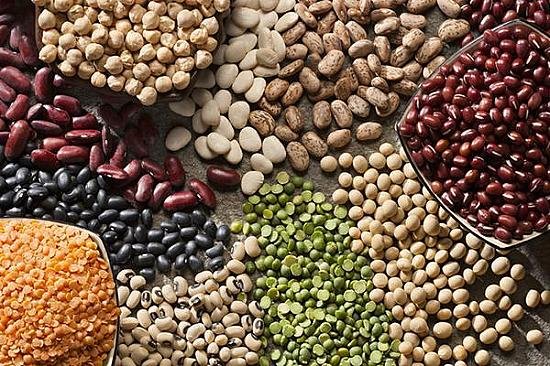
When it comes to plant-based protein, legumes are hard to beat. Members of this family of plants (which includes beans, lentils, and peas) are also rich in complex carbohydrates — the healthy type that take a long time to digest. Legumes are also high in fiber, low in fat, and contain an array of vitamins and minerals.
“Substituting legumes for less-healthy forms of protein and carbohydrates can help prevent or manage common conditions that contribute to heart disease,” says Dr. Rani Polak, founding director of the Culinary Healthcare Education Fundamentals (CHEF) Coaching program at Harvard’s Institute of Lifestyle Medicine.
Why? For starters, the protein in many meat and dairy products comes with cholesterol-raising saturated fat. And simple carbohydrates from refined grains — like white bread and white rice — have been stripped of their cholesterol-lowering fiber.
How legumes support heart health
Legumes contain two forms of healthy fiber: soluble fiber and resistant starch. Soluble fiber acts like a sponge in the digestive tract, trapping cholesterol-rich bile and allowing your body to eliminate it. Resistant starch breaks down in the large intestine, providing food for gut bacteria that produce short-chain fatty acids. Together with other fiber components, these substances may help lower cholesterol, blood pressure, inflammation, and body weight — all important causes of heart disease.
“Legumes are also quite filling, which can also help people eat less and lose weight,” Dr. Polak says. Eating legumes may also lower the risk of type 2 diabetes, probably because legumes have a low glycemic index, which helps control blood sugar levels. Having diabetes more than doubles the risk of developing heart disease.
Potential downsides from legumes
Like other high-fiber foods, legumes can cause intestinal gas, leading to bloating and flatulence. If you rarely eat legumes, ramp up your intake gradually. Keep eating them regularly and your intestinal bacteria will acclimate to the extra fiber and produce less gas over time.
Soaking beans overnight and cooking them in fresh water helps remove the gas-producing substances; soaking twice is even more effective. But that’s another reason people may avoid legumes; they think they’re too time-consuming to prepare. You can always use canned beans, however. And nearly all of the soaking and cooking time for beans is hands-off, Dr. Polak points out.
Incorporating legumes into your diet
Start by replacing some of the meat in your favorite dishes (such as tacos or pasta sauce) with low-sodium canned black or red beans. Lentils, which don’t require soaking, come in a variety of colors, including brown, green, and black. Tiny orange lentils (also called red lentils) cook in just five to seven minutes. Try Dr. Polak’s recipe (see “Orange lentil salad with feta and fresh herbs”). You can jazz it up by adding any combination of cooked whole grains, diced vegetables, or chopped nuts, he suggests.
- Swap out part of a serving of rice with cooked lentils.
- Toss kidney beans or black-eyed peas into a green salad.
- Snack on edamame or try one of the many other ways to enjoy soybeans.
- Make soup with green or yellow split peas.
- Whip up some hummus or other dishes made with chickpeas, such as chana masala (chickpeas cooked with tomato sauce and spices).
- Seek out recipes that use beans, such as frijoles refritos (mashed, fried pinto beans simmered with onion and garlic) or pasta e fagioli (cannellini beans with small pasta shapes in tomato broth).
Orange lentil salad with feta and fresh herbsThis recipe, from Dr. Rani Polak, of Harvard’s Institute of Lifestyle Medicine, can be customized by adding cooked whole grains, diced vegetables, or chopped nuts.
Place lentils and a pinch of salt in a small pot and add water to cover. Bring to a boil over medium heat, and then immediately remove from heat and drain. Rinse lentils in cold water and drain in a colander. Transfer to a salad bowl. Add lemon juice, oil, garlic, mint, parsley, and cheese. Let sit for at least 30 minutes at room temperature for flavors to blend. Add salt and pepper before serving. |
About the Author
Julie Corliss,
Executive Editor, Harvard Heart Letter
Julie Corliss has been the executive editor of the Harvard Heart Letter since 2013. She also writes for the Harvard Health Letter, Harvard Women’s Health Watch, and Harvard Men’s Health Watch, as well as for Harvard …
See Full Bio
View all posts by Julie Corliss
About the Reviewer
Rani Polak, MD, Chef, MBA,
Contributor
Dr. Rani Polak is the founding director of both the Culinary Healthcare Education Fundamentals (CHEF) coaching program at the Institute of Lifestyle Medicine, Spaulding Rehabilitation Hospital, and the Center of Lifestyle Medicine at Sheba Medical Center, …
See Full Bio
View all posts by Rani Polak, MD, Chef, MBA
Share
Print This Page
Disclaimer:
As a service to our readers, Harvard Health Publishing provides access to our library of archived content. Please note the date of last review or update on all articles.
No content on this site, regardless of date, should ever be used as a substitute for direct medical advice from your doctor or other qualified clinician.
