

No herbs can replace thyroid hormones, but some studies report they can have an effect on thyroid function and health.
The thyroid is an endocrine gland that controls thyroid hormone production. These hormones play a role in a variety of bodily processes. Thyroid conditions affect millions of people across the world. When irregularities develop in the thyroid, it can cause a hormone imbalance that may impact the body.
What is the thyroid gland?

The thyroid is an endocrine gland that sits in the neck. It produces hormones that the function and metabolism of all red blood cells containing a nucleus.
The thyroid produces hormones responsible for regulating the body’s functions. However, thyroid conditions are one of the forms of endocrine disorders globally.
Thyroid disorders can cause relating to:
- temperature regulation
- blood pressure
- fertility
- metabolism
- mental health
Many different thyroid conditions may develop,
- hyperthyroidism, where thyroid hormone secretion is too high
- hypothyroidism, where thyroid hormone secretion is too low
- goiter, due to thyroid gland enlargement
- thyroid cancer
»LEARN MORE:12 signs and symptoms of hypothyroidism (underactive thyroid)
Herbs for thyroid health
Including certain herbs in a person’s diet may help support thyroid function. However, herbs cannot replace medical treatment and more research is still necessary to understand their effectiveness. It is advisable to consult a doctor before trying any herbs for thyroid health.
Herbs that have some evidence suggesting they may potentially support thyroid health include:
Ashwagandha
Ashwagandha, or Withania somnifera, is a herb that some studies suggest can offer different benefits. The herb has that are:
- anti-inflammatory
- neuroprotective
- adaptogenic
- hematopoietic, meaning it may support stem cell function
- sleep-inducing
- anti-anxiety
Research from a 2019 rat study shows that using a methanolic extract, such as ashwagandha, may support thyroid function by reducing oxidative stress and improving thyroid hormones. However, potential side effects can include an upset stomach, diarrhea, and drowsiness.
It is also important to note that although the extract may support thyroid health in rats, this benefit may not translate to humans, and more research is necessary.
Ginger
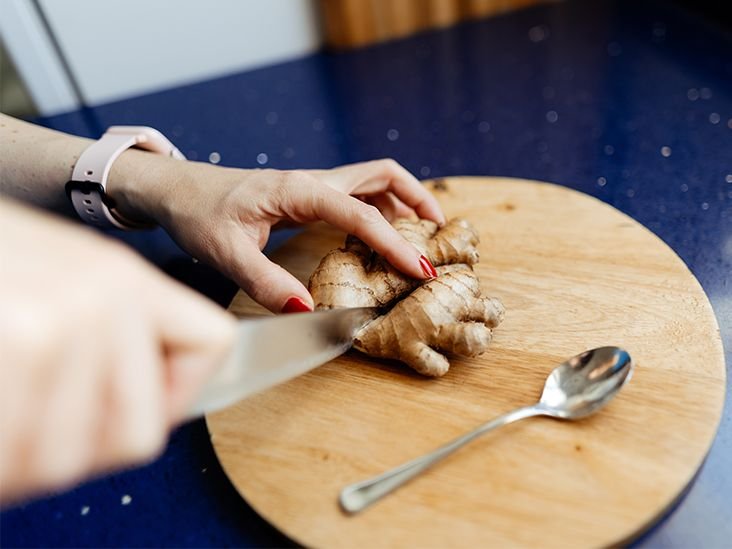
Ginger is a common spice, but the root classifies as a . Ginger has many health benefits, including anti-inflammatory, antioxidant, and antibacterial properties. However, there is currently not much research investigating its effect on the thyroid.
Using ginger supplements may people experiencing hypothyroidism, where the thyroid is not producing enough hormones. The herb may also reduce weight and regulate lipid and hormone profiles. However, the results of this research is mixed and further research is necessary.
If individuals take larger doses, ginger can have potential side effects, including mouth and throat irritation, digestive discomfort, heartburn, and diarrhea.
Doctors and healthcare professionals do not yet know enough about ginger in therapeutic doses. Due to this, pregnant people and those who are breastfeeding should avoid ginger supplements and discuss any intended use with their doctor.
Atriplex halimus
Traditional Algerian medicine uses the herb Atriplex halimus to manage thyroid disorders.
Early lab and animal research suggest that the herb benefits overactive and underactive thyroids and is effective in treating thyroid cysts due to its phytochemical content. However, more human studies are necessary.
However, there is currently little research into this area, so the dangers and side effects are unknown.
»LEARN MORE:Why are polyphenols good for you?
Black cumin
Black cumin, or Nigella sativa, is another herb that traditional medicine uses to treat thyroid conditions. It contains phytochemicals and biological components that claim to support various functions in the body, including:
- alkaloids
- coumarins
- flavonoids
- phenolics
Some evidence suggests that some studies showed small drops in thyroid antibodies or changes in TSH, but the research is short and limited. We do not know if it improves symptoms or long-term thyroid health. It may have a beneficial effect on Hashimoto’s thyroiditis, a condition that gradually destroys the thyroid.
Black cumin is likely safe when taken in small doses for a short time. However, some people report allergic skin rashes and lower blood pressure. It may be advisable for those taking blood-thinning medications to avoid black cumin altogether due to the potential bleeding risk.
Bunium incrassatum
Bunium incrassatum is a medicinal herb that may potentially those with different thyroid conditions. For example, a 2022 study on rats found that the herb can help repair damaged thyroid tissue due to an overactive and underactive thyroid.
Further studies are necessary to confirm the benefits and safety in humans, but the herb has antioxidant properties and contains phytochemicals that can protect cells.
Without proper preparation, this herb may cause gastrointestinal conditions.
»LEARN MORE:10 digestive disorders and their symptoms
Saussurea costus
Saussurea costus is a form of thistle that people in Saudi Arabia use , though it also plays a more general role in traditional medicine. Small studies note that the herb has antioxidant properties and contains flavonoids.
There is scientific evidence to support the role of Saussurea costus in treating thyroid conditions. However, Saussurea costus continues to play a significant role in traditional medicine, and some research in animal models report the herb to have benefits for managing thyroid conditions.
Experts know little about the side effects, drug interactions, or the effects of S. costus on those who are pregnant or breastfeeding. Some people also report allergic reactions, including contact dermatitis.
Agarwood
In traditional medicine, agarwood, or Aquilaria malaccensis, may play a role in helping thyroid cancer. For example, somed cancer. This could be due to agarwood containing antioxidants that are detrimental to several cancer cell lines
However, although the chemicals from agarwood may affect cancer cells in a dish, this does not mean it will be effective in people with thyroid cancer. Additionally, breathing incese smoke could irritate the lungs.
Further research is necessary to increase confidence in the benefits of agarwood for thyroid cancer and to better understand any potentially harmful side effects.
Bugleweed
Bugleweed, Lycopus spp., may possibly have effects. This may make the herb suitable for people with an overactive thyroid.
A 2021 paper notes that lab studies suggest that bugleweed may reduce thyroid activity. However, the evidence in people is limited and further research is necessary.
Herbs to avoid
While some herbs may display some promise for thyroid health, others can worsen thyroid conditions.
For example, reports that consuming high-dose celery extracts for weight loss could result in hyperthyroidism.
When to contact a doctor
Individuals should always contact a doctor if they experience symptoms linked to thyroid conditions,
- fatigue
- weakness
- unexplained weight change
- change to heart rate
- heat or cold intolerance
- constipation or diarrhea
- dry hair or skin
If a person considers herbal treatment for thyroid health, it is important to discuss this with a doctor first. While herbs are natural, they can have specific properties that act medicinally or could interact with other medications.
If an individual experiences unusual symptoms after taking herbs to support thyroid function, they should seek medical advice as soon as possible.
»FIND CARE:Find an endocrinology specialist in your area today.
Summary
The thyroid is a small endocrine gland that releases hormones important for the body’s function. Without treatment, thyroid disorders can severely impact a person’s quality of life.
Some traditional medicines use herbs to support thyroid health. However, more scientific research is needed to confirm the benefits of herbs for thyroid conditions.
Individuals should always contact a doctor or healthcare professional if they experience symptoms relating to thyroid conditions or before starting a herbal treatment plan.
